

Stairlift Advice
Independent guide. Last updated 23 September 2026.
Buying a stairlift is rarely a snap decision. It usually follows a fall, a health change, or a growing sense that stairs are becoming unsafe.
This advice hub brings together practical, UK-specific stairlift guidance, covering how stairlifts work, when they are worth it, what types exist, and what to consider before committing.
Stairlift advice at a glance
- A stairlift is a motorised chair that travels on a rail fixed to the staircase, letting you ride upstairs safely while seated.
- Typical UK prices on our price index: new straight stairlifts £1,500 to £3,500, with a median advertised price of £1,995; curved and outdoor models cost more because the rail is made to measure. See our stairlift price guide.
- Funding: the means-tested Disabled Facilities Grant covers adaptations up to £30,000 in England. See stairlift grants and funding.
- Why it matters: falls on stairs are the leading cause of fatal home accidents in the UK. See our UK stairs falls statistics.
Independent advice. Figures last reviewed July 2026.
Stairlift Safety, Fire and Evacuation
A stairlift fitted properly and serviced yearly is safe equipment, but two things are widely got wrong. Weight limits are model-specific, running from 125kg to 160kg across current UK models and falling as stairs get steeper, so no single figure applies to all. And a stairlift is not an escape route: at 0.1 metres per second it is far too slow for a fire. For anyone who could not get out unaided, the fire service’s free home safety visit and person-centred assessment are the things to arrange in advance.
Stairlifts and Parkinson’s: What to Consider
No UK clinical authority says whether a stairlift suits someone with Parkinson’s. NICE’s Parkinson’s guideline does not mention stairlifts, stairs or home adaptations at all, and Parkinson’s UK says only to get advice from an occupational therapist first. That absence is the honest answer: it is decided person by person, and the assessment is free. What this page does is set out what the published evidence covers, including one finding that cuts against the obvious assumption, so you know what to raise.
Platform Lifts and Wheelchair Stair Lifts in the UK
A seated stairlift carries a person and leaves the wheelchair behind. Where the chair has to travel too, there are three options: an inclined platform lift, which needs a staircase wider than most UK homes have; a step lift for short rises, at £5,000 to £15,000; and a through-floor home lift, from £17,000 before VAT. The question that decides between them is not which machine but whether the person can transfer onto a seat, because if they can, a seated stairlift costs a fraction as much.
Stairlifts for Children and Young People
A stairlift can work for some disabled children, and child seats with five-point harnesses and safety locks exist as factory options, but the route starts with a free occupational therapy assessment through your council, not with a retailer. The funding position is stronger than most families expect: a Disabled Facilities Grant[1] application made for a disabled child is not means tested, so parents’ income and savings are not counted. For a child who uses a wheelchair, the assessment will often point to a through-floor lift instead.
Stairlifts in Listed Buildings
A stairlift in a listed building may need listed building consent, because the test in law is whether the work affects the building’s character, and the staircase is often the most significant feature a listed interior has. The sequence matters more than the answer: ask the conservation officer first, before anything is ordered. Asking is free, applying is free, and unauthorised works are a criminal offence. In the stairlift’s favour, rails fix to the treads, not the wall, and the work is largely reversible, and councils do grant consent.
Stairlift or Move Downstairs? Comparing the Two Options
Converting a ground-floor room into a bedroom and adding an accessible shower room costs £5,000 to £15,000 where the space and the drainage are already there, against £1,500 to £3,500 for a straight stairlift. The stairlift is cheaper and reversible. Moving downstairs is permanent and takes a room out of use, but removes the staircase from the question, which is what matters if a stairlift would not be safe. In many UK homes one fact decides it: the only bathroom is upstairs.

When the Stairs Stop Feeling Safe: After a Fall, an Operation or a Diagnosis
When the stairs stop feeling safe after a fall, surgery, a stroke, dementia or MS: what to do first, who to ask, and when a stairlift helps.
UK Stairlift Regulations and Standards: What the Law Actually Requires
Stairlift sellers talk about regulations a lot, and cite them precisely almost never. This page sets out every standard and law that actually applies to a stairlift in the UK, with a link to the primary source for each one. It covers the product standard, the...

The Cost of a Fall in the UK
What falls cost the NHS in the UK, set against what it costs to prevent them. Fully sourced figures from OHID, NICE, BRE and the National Hip Fracture Database.
Browse All 43 Stairlift Advice Guides
Every guide in this section, grouped by what you are trying to work out. All guides are independent, UK-focused and regularly reviewed.
Deciding: do you need a stairlift?
- Signs You Need A Stairlift
- Signs an Elderly Parent Is Struggling with Stairs (and What to Do Next)
- Is a Stairlift Worth It?
- When a Stairlift Is Not the Right Solution
- Common Stairlift Myths UK
- Common Stairlift Mistakes to Avoid
- Stairlift Buying Guide UK
- New vs Used Stairlifts Advice And Tips
Alternatives and comparisons
- Alternatives to Stairlifts You Should Consider First
- Stairlift vs Moving House vs Living Downstairs
- Stairlift vs Home Lift Explained
- What Care Homes Actually Cost, Compared To Staying At Home With Adaptations
Health conditions and recovery
- Stair Options After A Stroke Or Hip Operation
- When Dementia Changes The Stairlift Equation
- Stairlifts for Arthritis Sufferers
- Hospital Discharge and Home Stairs: Getting Ready for Coming Home
- What An Occupational Therapist Actually Does (And How To Get One For Free)
- Best Stairlifts for Handicap Accessibility
- Stairlifts for Elderly Parents: A Practical UK Guide
Talking to family
Falls and stair safety
- Fall Prevention Tips And Advice
- After A Fall: A Seven-Day Checklist For Families
- UK Stairs Falls Statistics: Deaths, Injuries and NHS Costs
How stairlifts work in practice
- How Do Stairlifts Work? Complete Breakdown?
- Stairlift Track Options UK
- Stairlift Accessories UK
- Stairlift Benefits: How a Stairlift Improves Daily Life
- Different Names for Stairlifts: Chair Lift, Stair Glide and More
- Home Adaptations Advice And Tips
- How Stairlifts Help Seniors Stay at Home?
- Stairlifts for MS
Data, trends and the wider picture
- UK Stairlift Statistics 2026: Market, Prices, Grants & Safety Data
- UK’s Ageing Population UK
- UK Government Confirms £723 Million for Home Adaptations as Councils Push for Higher Accessibility Standards
- Property Sale Tax UK
- Who Invented the Stairlift? History & Origins?
- What Will Stairlifts Look Like in 2050?
- Designing for Accessibility For Your Home
- What Renovation Shows Miss on Accessibility?
Stairlift Advice: Practical Guidance Before You Decide
For the numbers behind this decision, see our UK stairlift statistics and the stairs falls safety data.
What Is a Stairlift? (Quick Definition)
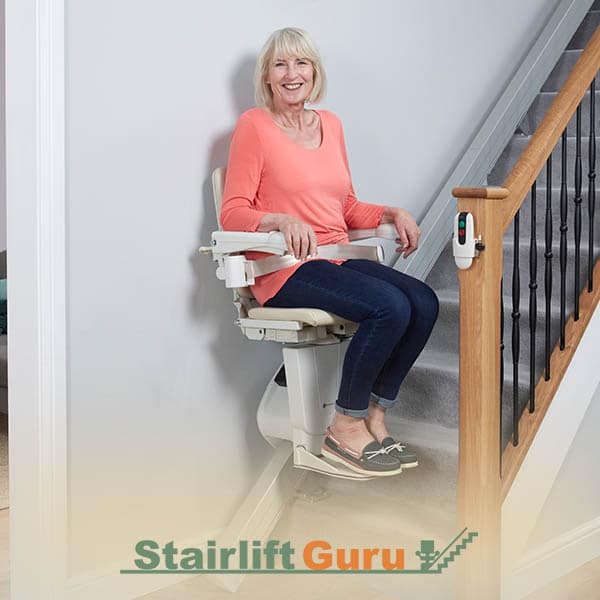
A stairlift is a motorised chair that travels along a rail fixed to a staircase, allowing someone with limited mobility to move safely between floors without climbing stairs.
If you are new to the topic, start with a simple explanation of how stairlifts work, including their mechanics and safety systems.
Signs You Might Need a Stairlift
Many people wait longer than they should.
Common warning signs include:
- Difficulty climbing stairs without stopping
- Using bannisters or walls for support
- Avoiding upstairs rooms
- Fear of falling
If this sounds familiar, see signs you need a stairlift for a more detailed checklist.
Falls are one of the leading causes of injury in older adults, which is why stair safety overlaps closely with fall prevention advice for the elderly.
Types of Stairlifts and Rails
The staircase itself determines what options are available.
Most homes require either:
- A straight stairlift
- A curved stairlift with a custom rail
Some staircases need specialist solutions, such as narrow, standing, or heavy-duty stairlifts. Rail design also varies depending on bends, landings, and space constraints.
For a breakdown, see:
New vs Used Stairlifts
A common question is whether a reconditioned stairlifts stairlift is good enough.
In short:
- New stairlifts suit long-term needs and curved staircases
- Used stairlifts can work for straight stairs and short-term use
There are trade-offs around warranty, availability, and future resale. A full comparison is covered in new vs used stairlifts.
Is a Stairlift Worth It?
For many households, the decision is less about cost and more about independence.
A stairlift often costs less than:
- Moving to a bungalow
- Major home renovations
- Long-term care support
If you are weighing this up, is a stairlift worth it? Looks at the decision from a practical, not sales-driven, perspective.
You may also want to compare the impact against broader lifestyle changes covered in benefits of having a stairlift.
Stairlifts as Part of Home Adaptations
A stairlift is often one part of a wider accessibility plan.
Other adaptations might include:
- Grab rails
- Walk-in showers
- Wider doorways
If stairs are just one of several challenges, see home adaptations for a broader view.
What Happens If a Stairlift Breaks Down?
Breakdowns are rare, but they do happen.
Most modern stairlifts:
- Run on batteries during power cuts
- Stop automatically if an obstacle is detected
- Have manual lowering options
If you depend on your stairlift, it is also worth joining the free Priority Services Register at thepsr.co.uk, so your electricity network gives you priority updates and extra support during a power cut.
If something does go wrong, what to do if your stairlift breaks down explains the safest next steps.
Ongoing reliability is also influenced by seasonal use and stairlift servicing, covered in seasonal maintenance for stairlifts.
Looking Ahead: Technology and the Future
Stairlifts are changing, but not in the way marketing brochures suggest.
Most improvements focus on:
- Smoother starts and stops
- Quieter motors
- Better safety sensors
You can explore where things are heading in new stairlift technology and the future of stairlifts.
Advice Hub: How to Use This Section
If you are:
- Researching options → start with types, new vs used, and how they work
- Unsure whether to act → read the signs you need a stairlift and is it worth it
- Planning long-term → explore home adaptations and future technology
This section is designed to help you make decisions before looking at prices or quotes.
We do not sell or install stairlifts. Quotes go to UK suppliers.
If you buy a stairlift from a supplier we introduced you to, that supplier pays us a fee. Requesting quotes is free and we are not paid for the request itself. How we are funded
Free, no obligation
More UK stairlift data & tools
- Home adaptations vs care home costs
- Stairlift running-cost calculator
- UK Disabled Facilities Grant funding statistics
- DFG allocations by council
- Stairlift specifications and dimensions
- Stairlift prices by UK region
- VAT exemption calculator
- DFG waiting times by council
- Stairlift glossary
- The State of UK Stairlifts 2026
- UK ageing-in-place statistics
Choosing a stairlift: our six guides
Independent UK guides on every stage of the decision and the install.
- Is it time for a stairlift? , The decision before you start. Signs, conversations, and what to try first.
- Types of stairlift , Straight, curved, narrow, outdoor, heavy-duty, standing. Which one fits your home.
- Stairlift prices , What stairlifts actually cost in the UK. By type, with what changes the price.
- Stairlift grants and funding , Disabled Facilities Grant, NHS, charity, finance. Who pays for what.
- Buy, rent, or reconditioned , The three routes compared, with a decision flowchart.
- Living with a stairlift , Install, servicing, repair, batteries, sell, remove. The full lifecycle.