
Choosing a stairlift for someone with a disability starts with the staircase: one straight flight takes a straight stairlift, while a turn, landing or winder needs a curved rail. A wheelchair user who cannot transfer needs a platform lift.
Handicap has largely dropped out of use in the UK, where people say disabled or mobility impaired. Plenty of people still type it into a search box, though.
Either way, this guide covers the same thing: choosing a stairlift for someone with a disability. It explains which type suits which staircase, the features that matter in daily use, what it costs in Britain and who pays for it.
Key Takeaways
- A stairlift gives someone the upstairs of their house back. In most homes that means a bedroom and a bathroom, which is why it usually beats moving a bed into the front room.
- The staircase decides the type and most of the price. Straight stairs take a standard rail off the shelf. Anything with a turn, a landing or a winder needs a rail built for that one staircase.
- A wheelchair user who cannot transfer onto a seat needs a platform lift, not a stairlift.
- The Disabled Facilities Grant can cover the whole cost for a disabled person on a low income, and it is not means tested at all where the disabled person is a child.
We don’t sell or fit stairlifts. Quotes go to UK suppliers.
Quotes are free. We’re only paid if you buy: the supplier we introduced you to pays us a fee. How we are funded
Free, no obligation • UK-based suppliers only
What a Stairlift Actually Changes
The stairs are usually the first part of a house to become unusable. What follows is familiar. A bed gets moved downstairs, a commode appears in the living room, washing happens at the kitchen sink, and the household reorganises around one flight of steps.
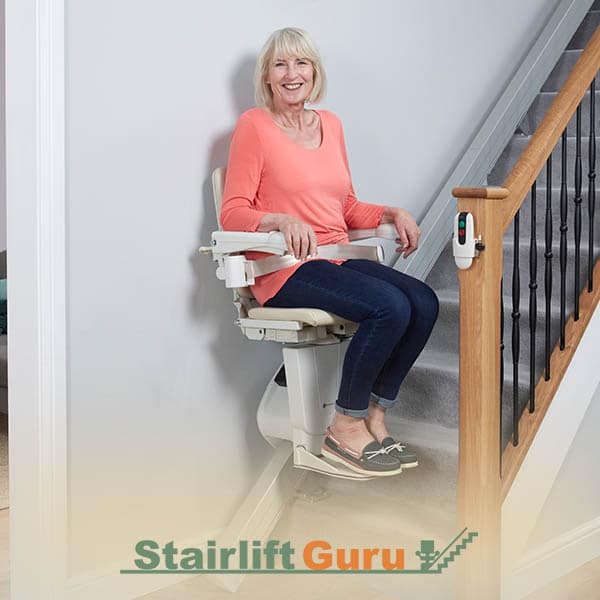
A stairlift reverses that. It’s a motorised chair on a rail fixed to the treads instead of the wall, and it carries one person between floors at walking pace or slower.
It is worth being clear about what a stairlift does not do. It does not help someone who cannot sit safely and hold themselves upright for the length of the journey, and it does not carry a wheelchair. Those cases need a platform lift or a through-floor lift instead, and an occupational therapist will say so at assessment.
Matching the Lift to the Staircase
Straight Stairs
One unbroken flight with no turn takes a straight stairlift. The rail is cut to length from stock, so the lift can often be fitted within a week or two of ordering and installed in a morning.
Turns, Landings and Winders
Anything other than a single straight flight needs a curved stairlift. The rail is measured and manufactured for that staircase alone, which is why curved lifts cost more and take longer to arrive. It is also why a curved rail is close to worthless second hand: it will not fit anyone else’s stairs.
Narrow Stairs and Stiff Knees
On stairs under about 75 cm wide, a slimline rail and a compact seat leave enough room for other people to pass. If bending is the problem and width isn’t, a perch or standing model carries the user half-seated. That suits stiff or fused knees and hips.
Steps Outside the House
Garden steps, porches and paths up to a front door take an outdoor stairlift, built with weatherproofed components and a cover for when it is not in use.
Wheelchair Users
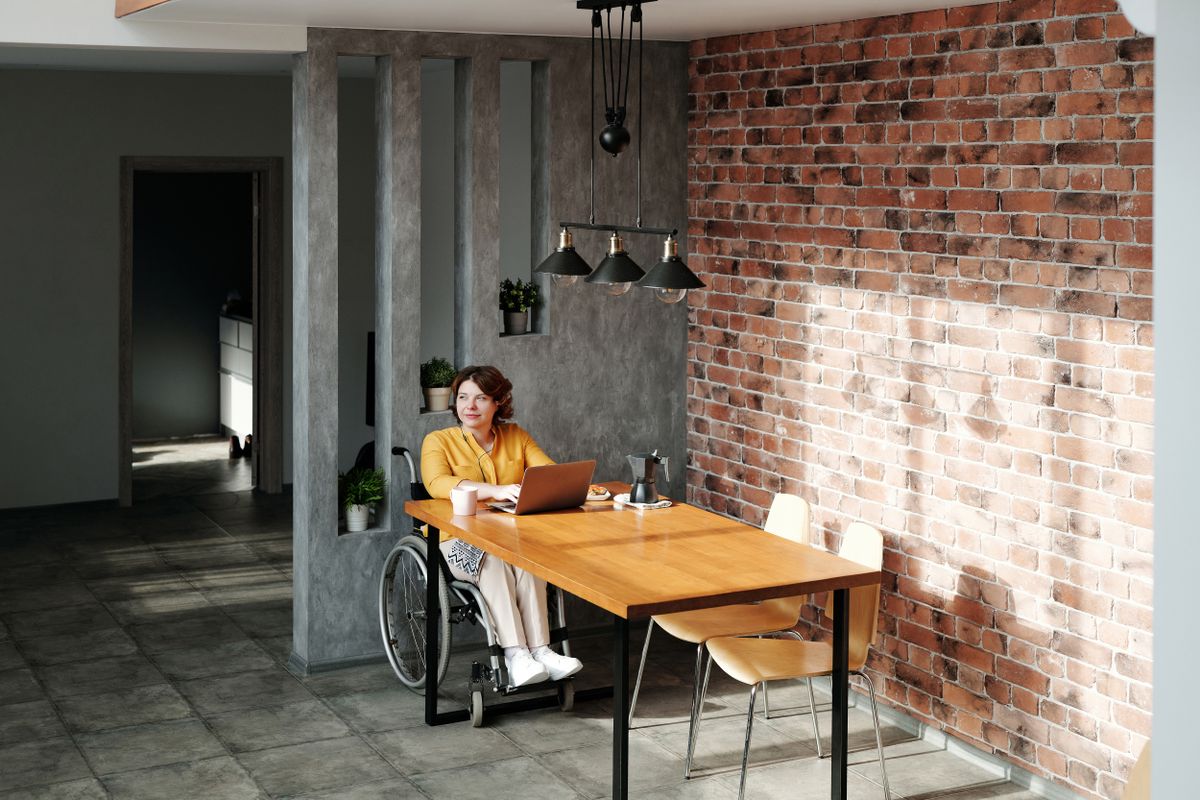
An inclined platform lift carries a wheelchair and its user up the flight with no transfer. It needs a wider staircase than a seated lift and costs considerably more. So it’s normally specified through an occupational therapist, and people don’t usually pick one from a brochure.
Features That Matter in Daily Use
Most of the specification sheet is standard across brands. These are the parts that change how the lift feels after six months:
- Obstruction sensors on the footrest and carriage, which stop the lift if a shoe or a cat is in the way.
- A swivel seat that locks at the top, so the user steps off onto the landing rather than turning on the stairs.
- Adjustable seat height, set at installation to the user’s leg length. Getting this wrong makes every trip harder than it needs to be.
- A powered footrest, folded from the seat rather than by bending down.
- Battery drive with charging points on the rail, so a power cut leaves the user on the landing rather than halfway up.
- Remote controls at both ends of the stairs, so the lift can be called back down after someone else has used it.
- A hinged or folding rail where the bottom of the stairs meets a doorway or a hall the lift would otherwise block.
What It Costs in the UK
| Type | Installed price |
|---|---|
| Straight | £1,500 to £3,500 (median advertised £1,995) |
| Curved | £4,000 to £7,000 or more (median advertised £4,597.50) |
| Narrow staircase | £1,600 to £2,300 (new slimline straight) |
| Standing or perch | £2,000 to £3,500 |
| Heavy duty, 25 stone and over | £2,500 to £4,500 |
| Outdoor | £2,000 to £4,500 |
| Rental | £40 to £100 a month plus an upfront fee |
One saving applies before any grant is considered. Where the user is chronically sick or disabled, the supply and installation of a stairlift are zero rated for VAT, so the quoted price should carry no VAT at all. A quote that adds 20 per cent is a quote to query.
Who Pays
The main route is the Disabled Facilities Grant from your local council. It’s worth up to £30,000 in England, £36,000 in Wales and £35,000 in Northern Ireland, where the Housing Executive can raise it further in some cases.
Scotland doesn’t use the DFG. It funds adaptations through each council’s Scheme of Assistance instead. The grant is means tested for adults, but not where the disabled person is a child.
Our stairlift grant checker works out which scheme covers your postcode and links you to your own council. For the detail on eligibility, waiting times and what to do if you are refused, see our stairlift grants guide.
Installation and Servicing
A straight lift is usually fitted in a morning. A curved lift takes longer to arrive because the rail is manufactured first. The survey that measures it matters most of all. A bad survey shows up later as a lift that clips a bannister or stops short of the landing.
After that, budget £80 to £180 for an annual service, which most warranties require. Send repairs to an engineer who works on that brand, and avoid a general handyman. Our servicing guide covers what a service should include, and our maintenance and repair guide covers the common faults.
Prefer to watch? This video covers the main points:
Frequently Asked Questions
What features should I look for in a stairlift?
Obstruction sensors, a swivel seat that locks at the top, a seat height set to the user at installation, a powered footrest, and battery drive so the lift still works in a power cut. Remote controls at both ends matter in any household where more than one person uses the stairs.
How do I choose the right type for my home?
Start with the staircase, because it rules most options out. One straight flight takes a straight lift; a turn, a landing or a winder means a curved rail. Then check the user can sit and stay upright for the journey, and measure the width if the stairs are narrow. An occupational therapist assessment settles the borderline cases, and it is needed anyway for a grant.
Is there financial help with a stairlift in the UK?
Yes. The Disabled Facilities Grant is the main one, worth up to £30,000 in England, £36,000 in Wales and £35,000 in Northern Ireland, with Scotland funding adaptations through the Scheme of Assistance. VAT relief applies separately where the user is chronically sick or disabled, and charities can help with a shortfall.
What does it cost to maintain a stairlift?
An annual service runs £80 to £180 depending on brand and provider. Batteries are the other recurring cost, typically replaced every two to five years.
Can a wheelchair user use a stairlift?
Only by transferring onto the seat, which many wheelchair users cannot do safely. Where a transfer is not realistic, an inclined platform lift carries the chair and its user together, and a through-floor lift is the alternative where the staircase is too narrow for a platform.
Related Guides
Choosing a stairlift: our six guides
Independent UK guides on every stage of the decision and the install.
- Is it time for a stairlift? , The decision before you start. Signs, conversations, and what to try first.
- Types of stairlift , Straight, curved, narrow, outdoor, heavy-duty, standing. Which one fits your home.
- Stairlift prices , What stairlifts actually cost in the UK. By type, with what changes the price.
- Stairlift grants and funding , Disabled Facilities Grant, NHS, charity, finance. Who pays for what.
- Buy, rent, or reconditioned , The three routes compared, with a decision flowchart.
- Living with a stairlift , Install, servicing, repair, batteries, sell, remove. The full lifecycle.
 ChatGPT