


The first powered home stairlift was built in the 1920s by an American engineer named C.C. Crispen, but the story starts four centuries earlier, with a Tudor king who could no longer manage his palace stairs. This guide covers who invented the stairlift, how the technology developed, and how those early machines became the devices fitted in UK homes today.
Quick history of stairlifts
- The earliest recorded stairlift was made for King Henry VIII at Whitehall Palace in the 1530s
- C.C. Crispen built the first powered home stairlift, the Inclinator, in the 1920s
- Stannah launched its first home stairlift in 1975, helping make them mainstream in Britain
- Modern stairlifts are battery powered with obstruction sensors, swivel seats and made-to-measure curved rails
We don’t sell or fit stairlifts. Quotes go to UK suppliers.
Quotes are free. We’re only paid if you buy: the supplier we introduced you to pays us a fee. How we are funded
Free, no obligation • UK-based suppliers only
The earliest stairlift: King Henry VIII
The first stairlift on record was created for King Henry VIII in the 16th century. After a serious jousting injury in 1536, and with his mobility worsening in later life, the King could not climb stairs unaided. Palace inventories describe a chair that goeth up and down installed at Whitehall Palace in London.
The chair ran on a block-and-tackle rope system hauled by servants, borrowing rigging techniques from Tudor warships such as the Mary Rose. It carried the King up a staircase of around 20 feet. Crude as it was, it is the first documented example of a person being carried up stairs by a mechanical device in their own home.
Why stairlifts were invented
Every stairlift in history exists for the same reason: injury, illness or age made stairs unsafe, and moving to a single-floor home was not an option the person wanted to take. Before electric motors, the solutions were manual. Invalid chairs, rope-and-pulley rigs and simply being carried by servants all did the same job the modern stairlift does, with far more effort and far less dignity.
The first commercial stairlift: the Inclinator (1920s)
The modern stairlift was invented in the 1920s by C.C. Crispen, a self-taught engineer from Pennsylvania. Crispen designed a powered chair to help a friend who was ill and could no longer climb stairs, and called it the Inclinator.
The Inclinator had a folding wooden seat, a footrest, and a steel rail fixed to the treads, driven by an electric motor running off household power. It was the first stairlift designed and sold specifically for private homes. In the 1930s Crispen founded the Inclinator Company of America, and early production models found a ready market among polio survivors, people recovering from serious illness, and people with permanent disabilities.
Stairlifts come to Britain
British firms took the idea and built an industry on it. Stannah, a lift engineering company founded in London in 1867, launched its first home stairlift in 1975. It remains one of the largest manufacturers in the world.
Acorn followed in the 1990s. Brooks, a Yorkshire firm founded in 1972, became part of the Acorn group in 2001. Between them, UK manufacturers now export stairlifts to dozens of countries. You can compare the current line-ups in our stairlift companies guide.
What changed in the 20th century
Through the mid and late 1900s the machinery improved steadily: quieter motors, smoother rails, fold-away seats and footrests, and the first proper safety systems. As life expectancy rose, the customer base widened from people with specific disabilities to anyone finding stairs harder with age. Council grant schemes, which today take the form of the Disabled Facilities Grant, put stairlifts within reach of households that could not pay outright.
Today’s stairlifts
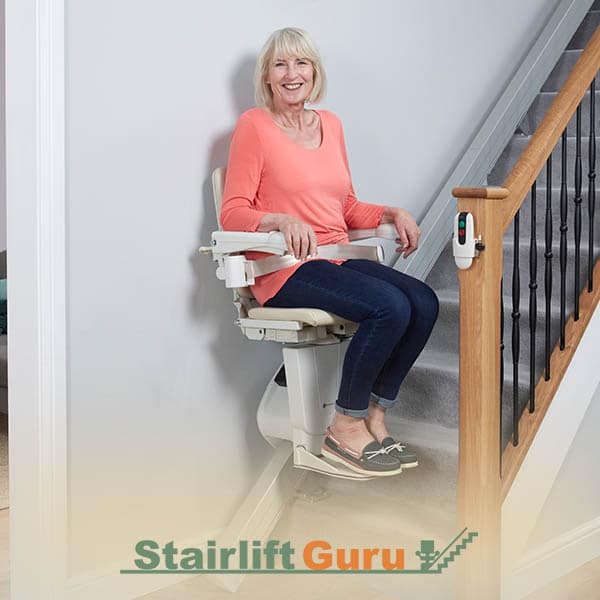
A stairlift fitted in 2026 shares almost nothing mechanical with the Inclinator. Modern models include:
- Battery power, so the lift keeps working during a power cut
- Obstruction sensors that stop the lift if anything blocks the stairs
- Swivel seats for safer exits at the top landing
- Remote controls to call or send the lift
- Slim folding designs for narrow staircases
- Made-to-measure curved rails produced from digital staircase surveys
Prices have settled into predictable brackets too: the median advertised price is £1,995 for a straight model and £4,597.50 for a curved one, tracked in our UK Stairlift Price Index. For a full breakdown of what you would pay today, see our stairlift prices guide.
Key milestones in stairlift history
| Period | Milestone |
|---|---|
| 1530s | Rope-hauled chair carries Henry VIII up the stairs at Whitehall Palace |
| 1920s | C.C. Crispen builds the Inclinator, the first powered home stairlift |
| 1930s | Inclinator Company of America begins commercial production |
| 1975 | Stannah launches its first home stairlift in the UK |
| 1990s | Acorn enters the market; curved rail technology matures |
| 2000s onwards | Battery power, obstruction sensors and digital surveys become standard |
Frequently asked questions
Who invented the stairlift?
C.C. Crispen built the first powered home stairlift, the Inclinator, in the 1920s. The earliest recorded stairlift of any kind was the rope-hauled chair made for Henry VIII in the 1530s.
Did King Henry VIII really use a stairlift?
Yes. Palace records describe a chair that goeth up and down at Whitehall Palace, hauled by servants using block-and-tackle rigging after the King’s 1536 jousting injury left him unable to manage stairs.
When did stairlifts become common in UK homes?
From the 1970s, after Stannah launched its first home stairlift in 1975. Rising life expectancy and grant funding made them a mainstream home adaptation over the following decades.
How different are modern stairlifts from early designs?
Fundamentally. Early models ran on mains power with no safety systems. Modern stairlifts are battery powered and carry obstruction sensors, seatbelts, swivel seats and remote controls as standard.
To see where the technology goes next, read our future of stairlifts article, or for the mechanics behind today’s models, how stairlifts work.
Watch Our Video
Choosing a stairlift: our six guides
Independent UK guides on every stage of the decision and the install.
- Is it time for a stairlift? , The decision before you start. Signs, conversations, and what to try first.
- Types of stairlift , Straight, curved, narrow, outdoor, heavy-duty, standing. Which one fits your home.
- Stairlift prices , What stairlifts actually cost in the UK. By type, with what changes the price.
- Stairlift grants and funding , Disabled Facilities Grant, NHS, charity, finance. Who pays for what.
- Buy, rent, or reconditioned , The three routes compared, with a decision flowchart.
- Living with a stairlift , Install, servicing, repair, batteries, sell, remove. The full lifecycle.
 ChatGPT