
When we think about keeping an older relative safe at home, cold winters usually come to mind first. New monitoring data suggests summer now deserves the same attention. Figures gathered from sensors in homes across the UK show that most homes lived in by older, ill or disabled people reached unsafe indoor temperatures this summer, a reminder that a proper home safety review should cover cooling and ventilation as much as heating, lighting and stairs.
What the monitoring data found
The findings come from home monitoring provider Lilli, whose sensors track things like temperature and movement in the homes of people supported to live independently. According to data first reported by trade title THIIS and Review Mobility, 81 per cent of the monitored homes recorded days above the recommended 26 degrees Celsius, with indoor peaks of 40 degrees logged in London during the summer heatwave. Around one in ten homes went through prolonged spells of three days or more above 32 degrees.
Those numbers matter because health guidance for older people is fairly clear. Specialists suggest keeping indoor temperatures between roughly 21 and 26 degrees where possible, and the British Geriatrics Society advises that a cool room should ideally sit below 26 degrees. Above about 32 degrees, the risk of dehydration, heat exhaustion and heatstroke rises sharply for anyone who is older or living with a long-term condition. It is why the UK Health Security Agency and the Met Office now run Heat-Health Alerts every year from 1 June to 30 September, warning that hot spells can lead to a rise in deaths among people aged 65 and over.
We do not sell or install stairlifts. Quotes go to UK suppliers.
If you buy a stairlift from a supplier we introduced you to, that supplier pays us a fee. Requesting quotes is free and we are not paid for the request itself. How we are funded
Free, no obligation • UK-based suppliers only
Why heat hits older people harder, and why mobility matters
Older bodies regulate temperature less efficiently. The sensation of thirst tends to weaken with age, some common medications affect how the body holds on to fluid, and a person can become dangerously overheated without necessarily feeling hot. That combination makes it easy to miss the warning signs until someone is already unwell.
Reduced mobility adds another layer. Much of the standard hot weather advice assumes a person can move around the house freely, opening and closing windows, retreating to a cooler room, or stepping outside into the shade during the hottest part of the day. Someone who finds the stairs difficult may not be able to reach a cooler bedroom, a shaded upstairs room or a ground floor that stays cooler in the afternoon. If the staircase has effectively become a barrier, half the home, and often the more comfortable half at a given time of day, can be out of reach. Managing the home environment itself then becomes far more important.
We do not sell or install stairlifts. Quotes go to UK suppliers.
If you buy a stairlift from a supplier we introduced you to, that supplier pays us a fee. Requesting quotes is free and we are not paid for the request itself. How we are funded
Practical steps to keep a home cooler
A few simple measures make a real difference, and most cost little or nothing. The NHS recommends closing curtains and blinds on sun-facing windows during the day, then opening windows to let cooler air through in the early morning and evening when the outside temperature drops below the temperature indoors. Fans can help when it is not too hot, though they become less effective once the air itself is very warm, so they should not be relied on alone in extreme heat.
Staying hydrated is just as important as staying cool. Keeping water within easy reach reduces the number of trips someone has to make to the kitchen, which matters a great deal if walking or using the stairs is tiring. Small daily living aids, from easy-grip cups to a bedside table that holds a jug of water, can quietly remove a barrier to drinking enough. It also helps to know the signs of heat exhaustion, such as dizziness, headache, heavy sweating and cramps, and to move the person somewhere cool and give them fluids if they appear. During a hot spell, a daily check on an older relative or neighbour who lives alone is one of the most useful things anyone can do.
Where home adaptations and grants fit in
Overheating is increasingly treated as a year-round housing issue rather than a rare event, and that shift changes what a good home safety review should look like. For years the focus has been on winter warmth and on preventing falls, both of which still matter. Summer cooling, ventilation and hydration now belong on the same checklist.
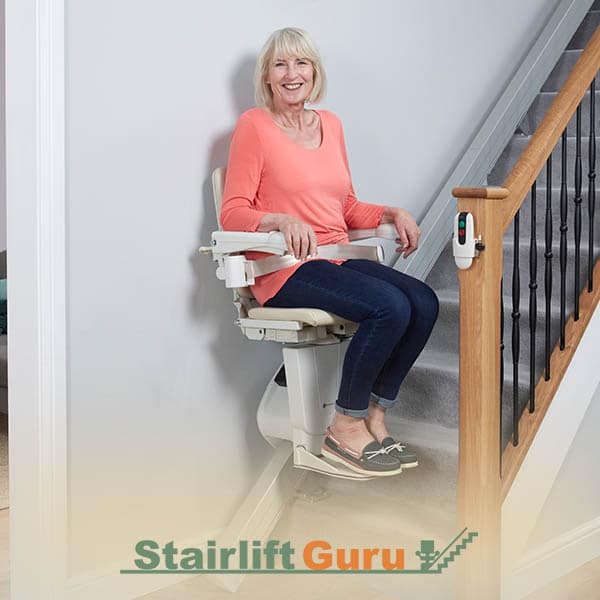
Keeping the whole home usable is part of the picture. If reduced mobility confines someone to a single floor, they lose the ability to choose the coolest or warmest room as conditions change through the day and across the seasons. A stairlift is one adaptation that can restore access to the rest of the house, whether that is a cooler bedroom in a July heatwave or a warmer living room in January. Whether it is the right solution depends entirely on the individual and the layout of the home, which is why an occupational therapist assessment is the sensible starting point.
Funding is worth checking too. The Disabled Facilities Grant can help pay for adaptations such as stairlifts, ramps and level-access showers for those who are eligible, and an assessment for one is a natural moment to raise concerns about heat as well as mobility. Cooling equipment itself is not a typical grant-funded item, but the professional carrying out a home visit can point towards the right local support, and an accredited installer can advise on the practicalities of any adaptation you are considering.
Planning ahead for hotter summers
UK summers are becoming warmer and hot spells more frequent, so this year’s readings are unlikely to be a one-off. For families supporting an older relative to stay independent at home, the message is to plan for both extremes of the calendar. Review the home for summer heat as thoroughly as you would for winter cold or trip hazards, keep water and cooling within easy reach, and stay in regular contact during heatwaves. If getting around the home is part of the challenge, contact your local council for a needs assessment, which is the route to an occupational therapist and to any grant funding you may qualify for. A home that stays comfortable and accessible in every season is one of the most practical foundations for ageing in place with confidence.
Choosing a stairlift: our six guides
Independent UK guides on every stage of the decision and the install.
- Is it time for a stairlift? , The decision before you start. Signs, conversations, and what to try first.
- Types of stairlift , Straight, curved, narrow, outdoor, heavy-duty, standing. Which one fits your home.
- Stairlift prices , What stairlifts actually cost in the UK. By type, with what changes the price.
- Stairlift grants and funding , Disabled Facilities Grant, NHS, charity, finance. Who pays for what.
- Buy, rent, or reconditioned , The three routes compared, with a decision flowchart.
- Living with a stairlift , Install, servicing, repair, batteries, sell, remove. The full lifecycle.
 ChatGPT