
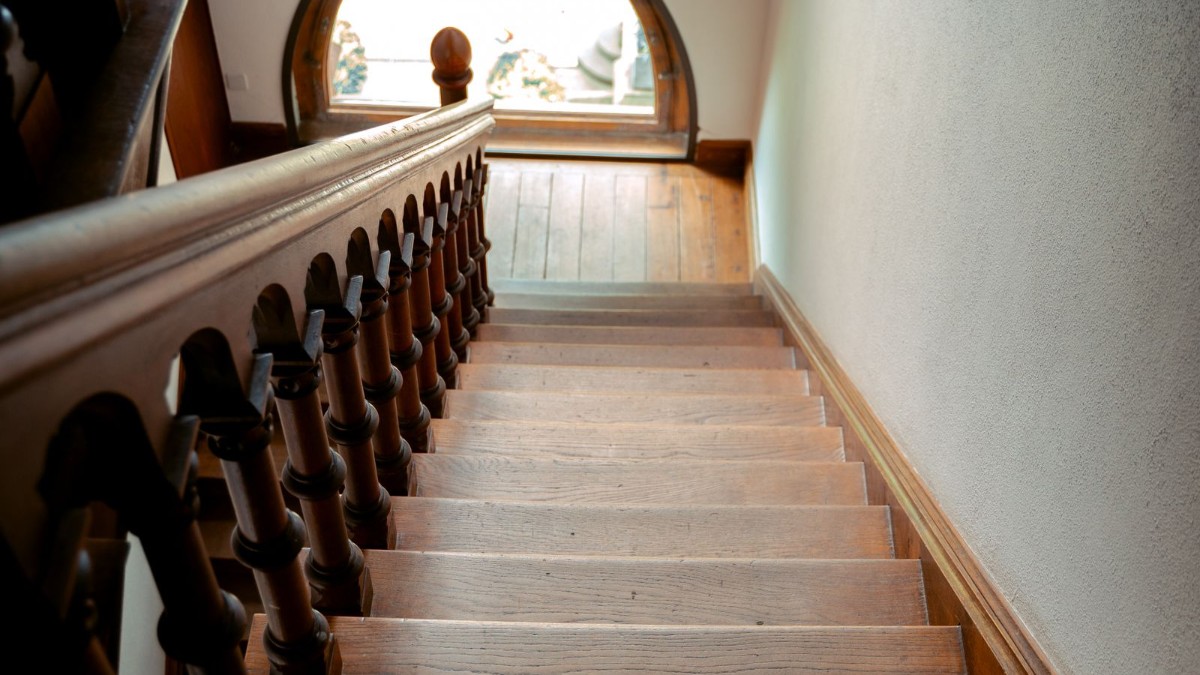
A single council in the East Midlands has just put a figure on something that affects households across the country: the cost of helping people stay safely in their own homes. Nottingham City Council has proposed a £3.1 million investment in specialist home adaptations, including stairlifts, so that tenants with disabilities and long-term health conditions can continue to live independently. For the many UK homeowners and renters weighing up similar changes, the plan is a useful window into how home adaptations are funded, who qualifies, and what equipment councils consider essential.
A £3.1 million commitment to independent living
The investment, reported by My Nottingham News in September 2026, is funded through the council’s Housing Revenue Account and was due to be considered by the authority’s Executive Board on 22 September. If approved, it sets up a four-year framework so that council tenants can keep accessing adaptations as their needs change, rather than facing uncertainty each budget year.
The council’s Executive Member for Housing and Planning, Councillor Jay Hayes, described the adaptations as “life-changing”, noting that they help people remain in the homes and communities they love while maintaining their dignity and quality of life. Local authorities have a statutory duty to provide adaptations of this kind under legislation including the Care Act 2014, the Housing Act 1985 and the Equality Act 2010, so the plan reflects an existing legal responsibility as much as a policy choice.
We don’t sell or fit stairlifts. Quotes go to UK suppliers.
Quotes are free. We’re only paid if you buy: the supplier we introduced you to pays us a fee. How we are funded
Free, no obligation • UK-based suppliers only
What specialist adaptations does the funding cover?
The money is earmarked for equipment that supports people with assessed mobility needs. According to the council, that includes stairlifts, through-floor lifts, step lifts and hoists. Each piece of equipment does a different job, which is part of why a blanket approach rarely works and why an assessment matters.
A stairlift carries a seated user up and down an existing staircase and suits the largest share of homes. A through-floor lift, sometimes called a home lift, travels vertically between floors and can be the better fit where someone uses a wheelchair or cannot transfer easily to a stair-mounted seat. A step lift helps with external or internal level changes, and a hoist supports transfers in and out of a bed, bath or chair. The right choice depends on the layout of the property and the person’s long-term needs, which is why an occupational therapist’s assessment usually comes first.
The scale of demand is striking. Nottingham reports that around 874 of its council homes, roughly 3.3 per cent of its housing stock, already have specialist lifting equipment installed. Of those, 722 are stairlifts, alongside 97 hoists, 53 through-floor lifts and 12 step lifts. Stairlifts are by some distance the most common adaptation, which mirrors what the wider market shows across the UK.
We don’t sell or fit stairlifts. Quotes go to UK suppliers.
Quotes are free. We’re only paid if you buy: the supplier we introduced you to pays us a fee. How we are funded
Council tenants and homeowners: two different routes
One point worth clearing up is that funding depends heavily on whether you rent from the council or own your home. Where the council is your landlord, adaptations are generally arranged and paid for by the authority as part of its duties to tenants, which is the situation the Nottingham investment addresses. That is why the money here comes from the Housing Revenue Account, the ring-fenced budget councils use to manage their own housing stock.
If you own your home or rent privately, the main route to public funding is the Disabled Facilities Grant, administered by your local council. In England the grant can provide up to £30,000 towards essential adaptations such as a stairlift, ramp or level-access shower. For adults it is means-tested on income and savings, while adaptations for disabled children are not means-tested. In both cases the process usually begins with an assessment by an occupational therapist, who recommends whether a stairlift or other adaptation is necessary and appropriate for your long-term needs. You can read more about this in our guide to stairlift grants.
Why home adaptations matter for an ageing population
Stories like Nottingham’s land against a bigger backdrop. The UK population is ageing, yet the housing stock has not kept pace: only a small minority of homes meet basic accessibility standards, even though the large majority of people over 65 live in ordinary, mainstream housing rather than specialist accommodation. When a home no longer works for the person living in it, the consequences can be serious, from a greater risk of falls to longer stays in hospital while a safe discharge is arranged.
Age UK and other charities have repeatedly warned that delays in delivering adaptations can leave older people stuck, sometimes waiting many months for work that would let them move around their own home safely. Timely adaptations are widely seen as a way to reduce those pressures, helping people avoid an earlier move into residential care and easing the strain on the NHS and social care. Viewed that way, a council setting aside money for stairlifts and lifts is as much a preventative health measure as a housing one.
What this means for you, and what to do next
If you or a relative are starting to find the stairs difficult, the Nottingham plan is a reminder that help exists and that the route to it depends on your circumstances. Council tenants should contact their housing provider or adult social care team to ask for an assessment. Homeowners and private renters can ask their local council’s adult social care service about an occupational therapy assessment and a Disabled Facilities Grant, and it is worth doing this early, as assessment and installation can take time.
It also helps to understand the costs involved before you make any decisions. Typical UK prices reported by industry sources put a straight stairlift at the lower end of the range and curved or made-to-measure models considerably higher, so getting a clear quote for your own staircase is sensible. Our guides to stairlift prices and UK stairlift companies can help you compare options and work out what suits your home and budget. Whether funding comes from a council, a grant or your own savings, the aim is the same one Nottingham set out: a home that is safe, accessible and supports independence for as long as possible.
Choosing a stairlift: our six guides
Independent UK guides on every stage of the decision and the install.
- Is it time for a stairlift? , The decision before you start. Signs, conversations, and what to try first.
- Types of stairlift , Straight, curved, narrow, outdoor, heavy-duty, standing. Which one fits your home.
- Stairlift prices , What stairlifts actually cost in the UK. By type, with what changes the price.
- Stairlift grants and funding , Disabled Facilities Grant, NHS, charity, finance. Who pays for what.
- Buy, rent, or reconditioned , The three routes compared, with a decision flowchart.
- Living with a stairlift , Install, servicing, repair, batteries, sell, remove. The full lifecycle.
 ChatGPT