
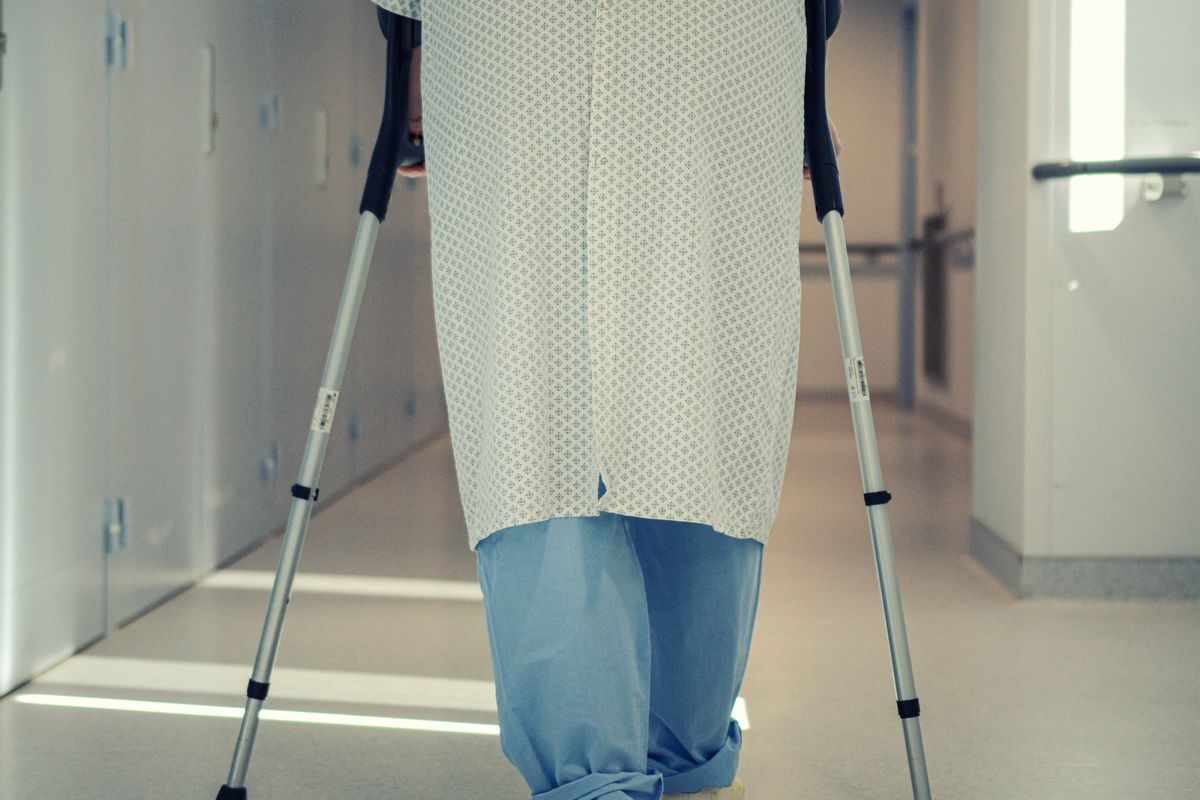
More than 13,000 older people a day are now stuck in hospital in England despite being well enough to go home, according to a new report from Age UK. It is a figure that has climbed by almost 70 per cent since 2021, and one of the biggest reasons people cannot leave is simple: their home is not ready for them to return to safely. For families weighing up a stairlift or other home adaptation, the findings are a timely reminder that preparing the home early can make all the difference to getting a loved one back where they want to be.
What Age UK’s new report found
Age UK’s report, The Longest Wait to Leave, describes delayed hospital discharge as a “crisis hiding in plain sight”. Its analysis of NHS England data shows that on a typical day in 2025/26, 57 per cent of people who could be discharged were still stuck on a ward. That works out at more than 13,000 people every day, overwhelmingly older people, who are medically fit to leave but cannot.
The scale of the problem is striking. Across 2025/26, 6.75 million hospital bed days were lost to discharge delays of seven days or more. That is more than one in seven of all NHS hospital beds occupied by someone who is ready to go home. The charity estimates these delays cost the NHS around £2.66 billion over the year, roughly £229 million in a single month.
Caroline Abrahams, Charity Director at Age UK, said policy makers had “stopped talking about delayed discharges, but they are high and rising”. She added that the delays “do enormous harm to older people” and argued that the term “bed blockers”, which she called ageist, “should never be used again”. The people caught in these delays, the report stresses, are the victims of a system that cannot arrange their return home quickly enough, not the cause of the problem.
We do not sell or install stairlifts. Quotes go to UK suppliers.
If you buy a stairlift from a supplier we introduced you to, that supplier pays us a fee. Requesting quotes is free and we are not paid for the request itself. How we are funded
Free, no obligation • UK-based suppliers only
Why getting home safely depends on the home itself
A hospital discharge is rarely just about medical readiness. It is also about whether the person can manage safely once they walk back through their own front door. For many older people recovering from a fall, a stroke, a hip operation or a spell of illness, the stairs are the single biggest obstacle. If getting to a bedroom or bathroom upstairs is no longer possible, discharge can stall while alternatives are arranged.
Age UK’s wider work on home adaptations has long shown how delays in fitting equipment feed into delays leaving hospital. Adaptations such as stairlifts, level-access showers and grab rails help people move around safely, reduce the risk of another fall and lessen the need for daily care. Yet the charity has previously found that more than two-thirds of councils took longer than the six months recommended in Disabled Facilities Grant guidance to install most adaptations, with the longest waits stretching beyond two years. When the home cannot keep pace with the person’s needs, the person ends up waiting too, often in a hospital bed.
We do not sell or install stairlifts. Quotes go to UK suppliers.
If you buy a stairlift from a supplier we introduced you to, that supplier pays us a fee. Requesting quotes is free and we are not paid for the request itself. How we are funded
Who is most affected
Older people are hit hardest at every stage. Age UK found that almost half of A&E admissions involve older people, and with beds still occupied by those waiting to be discharged, new admissions have nowhere to go. The longer someone stays, the greater the risk of deconditioning, losing muscle strength, confidence and independence, which in turn increases the amount of care they need on the way out.
Where you live matters too. The report describes delayed discharge as something of a postcode lottery. In recent data, just over a quarter of NHS Trusts accounted for half of all delayed discharges, and there was almost a 20 percentage point gap between the best and worst performing regions. Part of the picture is money: disputes between councils and the NHS over who pays for someone’s support after discharge can leave an older person stuck in the middle, waiting while the deterioration sets in.
What you can do to prepare
The value in a report like this, for families, is that it turns a national statistic into a practical prompt. If an older relative is heading into a planned operation, or if you can already see that stairs and bathing are becoming harder, the time to think about home adaptations is before a hospital stay, not during one. A home that is ready for someone to come back to removes one of the common reasons a discharge is held up.
It helps to plan ahead on funding. A stairlift is one of the adaptations that can be covered by a Disabled Facilities Grant in England, worth up to £30,000, and some councils operate faster routes for smaller items once a need has been assessed. Because grant assessments and installations can take time, starting the conversation with your local authority or an occupational therapist early is worthwhile. If you are funding privately, it is sensible to understand typical stairlift prices and the difference between buying and renting, since rental can suit shorter term recovery after an operation.
It is also worth knowing that the NHS itself sometimes provides equipment loans after a discharge, arranged through the hospital discharge team, a GP or the relevant clinical team. Asking the discharge team directly what support is available, and whether a home assessment can be carried out quickly, can help avoid an unnecessary extra night on the ward.
The bigger picture
Age UK is calling on the Government to end the funding disputes between the NHS and councils, to ensure every older person is assessed at home within 24 hours of discharge, and to strengthen community support so people can recover at home rather than in hospital. Whether or not those changes come quickly, the underlying message for households is clear. A home set up for safe, independent living, with a way to get up and down the stairs, is one of the practical things within a family’s control. Preparing it early can spare a loved one the longest wait of all, the wait to leave.
If you are starting to think about adaptations, our guides on stairlift grants and funding and the signs it may be time for a stairlift are a good place to begin.
Choosing a stairlift: our six guides
Independent UK guides on every stage of the decision and the install.
- Is it time for a stairlift? , The decision before you start. Signs, conversations, and what to try first.
- Types of stairlift , Straight, curved, narrow, outdoor, heavy-duty, standing. Which one fits your home.
- Stairlift prices , What stairlifts actually cost in the UK. By type, with what changes the price.
- Stairlift grants and funding , Disabled Facilities Grant, NHS, charity, finance. Who pays for what.
- Buy, rent, or reconditioned , The three routes compared, with a decision flowchart.
- Living with a stairlift , Install, servicing, repair, batteries, sell, remove. The full lifecycle.
 ChatGPT