

As the colder months close in, there is growing concern across the UK about how long older and disabled people are waiting for home adaptations, and for the occupational therapy assessments that often unlock them. For families hoping to make a home safer before winter, a stairlift or a grab rail can feel urgent, yet the route to getting one approved through the council can stretch on for months. Here is what is driving the delays, what they mean in practice, and the steps you can take now.
Why home adaptation waits are growing
Most publicly funded home adaptations in England begin with an assessment by an occupational therapist, who recommends what a person needs to stay safe and independent at home. Demand for these assessments has risen steadily as the population ages, but the workforce that carries them out has not kept pace. According to the Local Government Association’s 2026 workforce health check, around 3,500 occupational therapists work in local authorities in England, with roughly 250 posts sitting vacant and a turnover rate of about 10 per cent. The report flagged workforce planning as the weakest area councils are grappling with, warning that it poses a risk to service delivery.
On top of the staffing pressure, the process itself has several stages. A person usually needs a referral, then an occupational therapy assessment, then, for larger works, an application for a Disabled Facilities Grant that includes a means test and sign off from the council. Each step takes time, and a backlog at any one of them holds up the rest. Reports from Age UK and other bodies have repeatedly found that some people wait well over a year for adaptations to be completed, and campaigners have warned that long delays can leave vulnerable people stuck upstairs or at risk on the stairs in the meantime.
We do not sell or install stairlifts. Quotes go to UK suppliers.
If you buy a stairlift from a supplier we introduced you to, that supplier pays us a fee. Requesting quotes is free and we are not paid for the request itself. How we are funded
Free, no obligation • UK-based suppliers only
What a delay really means as winter arrives
The timing matters because autumn and winter are when falls tend to rise. Darker days, icy paths and more time spent indoors all add to the risk, and the staircase is one of the most hazardous parts of the home. NHS data shows that around one in three people over 65 and one in two people over 80 have at least one fall each year, and falls are among the leading causes of emergency hospital admission in older adults. Public health figures suggest falls account for more than four million hospital bed days annually in England.
For someone who already struggles with the stairs, a wait of several months is not just an inconvenience. It can mean washing at the kitchen sink because the bathroom is upstairs, sleeping in a downstairs room, or taking a daily risk on steps that are no longer safe. That is why many families start looking at their options rather than simply waiting for the system to catch up.
We do not sell or install stairlifts. Quotes go to UK suppliers.
If you buy a stairlift from a supplier we introduced you to, that supplier pays us a fee. Requesting quotes is free and we are not paid for the request itself. How we are funded
How the system is meant to work
The Disabled Facilities Grant is the main source of public funding for home adaptations in England, and the funding available to councils has been increased for the current year. The grant can cover works such as stairlifts, ramps, level access showers and widened doorways, up to a maximum award, with a means test for most adult applicants. The council arranges or approves an occupational therapy assessment to confirm what is needed, which is the step that most often becomes the bottleneck.
It is worth knowing that the rules and timescales vary between councils, and between the nations of the UK. Some areas run faster home improvement agencies or reuse schemes that recycle refurbished equipment to cut both cost and waiting time. If you are unsure where to start, your local council’s adult social care team is the first point of contact, and you can ask specifically how long their current assessment and grant waits are before you commit to that route.
Practical steps you can take now
If you or a relative needs help sooner than the council can provide it, there are several things worth doing. Start by requesting an occupational therapy assessment through the council as early as possible, since joining the queue now is better than waiting until a crisis. Ask the team to confirm their likely timescales in writing, and mention any changes in health or mobility that might raise the priority of the case.
In the meantime, simple measures can reduce the immediate risk. Keeping stairs clear and well lit, fitting a second handrail, removing loose rugs and improving lighting on landings all help. If the need is pressing, a private occupational therapy assessment can sometimes be arranged much faster than the council route, and the resulting report can still support a later grant application.
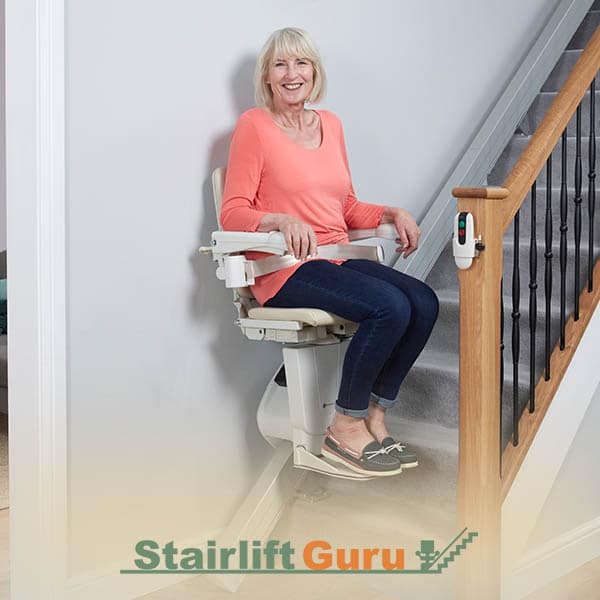
Some families choose to arrange a stairlift privately rather than wait, because a straight stairlift can often be surveyed and fitted within days or a couple of weeks once ordered. Straight models typically start from around £2,000 and curved staircases cost more, based on typical UK prices reported by industry sources, and rental is also available for shorter term or temporary needs. You can read more about what to expect on our guide to stairlift prices, and if cost is the barrier it is worth checking what help you may be entitled to on our page covering stairlift grants.
Looking ahead
The pressure on occupational therapy and home adaptation services is unlikely to ease quickly, and with winter approaching the stakes for older people at home are higher than usual. The encouragement for families is not to assume that a long wait is the only option. Getting into the queue early, asking clear questions about timescales, putting simple safety measures in place, and understanding both the grant route and the self funded route all help you make a calm, informed decision rather than a rushed one after a fall. Whatever path you choose, the goal is the same, which is keeping the people you care about safe and independent in their own home through the colder months and beyond.
Choosing a stairlift: our six guides
Independent UK guides on every stage of the decision and the install.
- Is it time for a stairlift? , The decision before you start. Signs, conversations, and what to try first.
- Types of stairlift , Straight, curved, narrow, outdoor, heavy-duty, standing. Which one fits your home.
- Stairlift prices , What stairlifts actually cost in the UK. By type, with what changes the price.
- Stairlift grants and funding , Disabled Facilities Grant, NHS, charity, finance. Who pays for what.
- Buy, rent, or reconditioned , The three routes compared, with a decision flowchart.
- Living with a stairlift , Install, servicing, repair, batteries, sell, remove. The full lifecycle.
 ChatGPT