
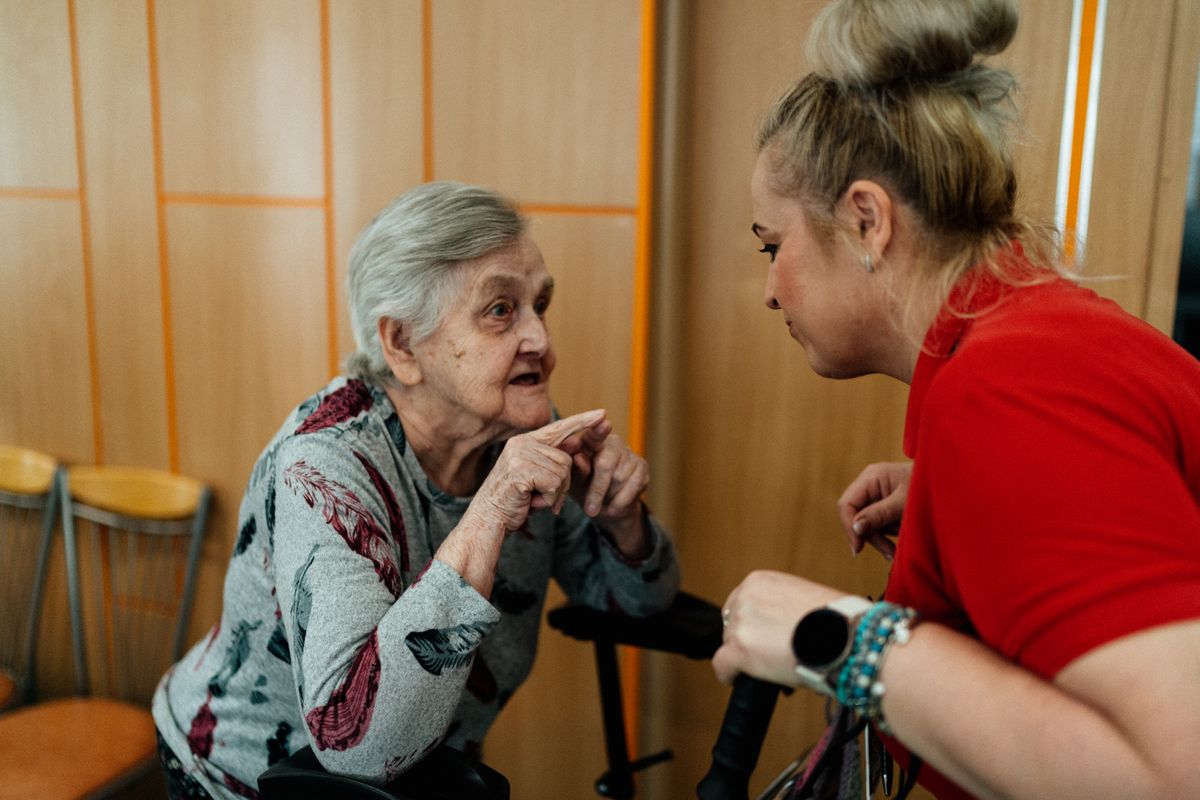
New figures from Skills for Care show that vacancies in England’s adult social care sector have fallen to their lowest level in ten years, which sounds like unambiguously good news. Look a little closer, though, and the same report reveals a domestic workforce that is steadily shrinking at the very moment the number of older people needing support is rising. For families weighing up how a relative will manage at home, that combination is worth understanding, because it strengthens the case for planning ahead with home adaptations rather than relying on care that is becoming harder to arrange.
What the latest workforce figures actually show
The Size and structure of the adult social care workforce in England report, published by Skills for Care in June 2026, found that the vacancy rate fell to 6.2 per cent in 2025/26. That is the lowest it has been since 2015/16 and equates to roughly 96,000 vacant posts on any given day, down more than 10 per cent on the previous year. The workforce also grew for a fourth year running, adding about 22,000 filled posts.
Those are genuine improvements, and the sector deserves credit for them. But the report is careful to add context. Vacancy levels in adult social care are still around three times higher than in the wider economy, so recruitment and retention remain a daily struggle for the care providers that many older people and their families depend on. A falling vacancy rate does not automatically mean there is a carer available when and where you need one, particularly for home care in more rural or under-served areas.
We do not sell or install stairlifts. Quotes go to UK suppliers.
If you buy a stairlift from a supplier we introduced you to, that supplier pays us a fee. Requesting quotes is free and we are not paid for the request itself. How we are funded
Free, no obligation • UK-based suppliers only
A shrinking domestic workforce and a growing need
The more sobering part of the report concerns who is actually filling these roles. The number of posts held by workers with British nationality fell by 40,000 over the past year, and by 130,000 since 2020/21. For several years, international recruitment filled much of that gap, but the removal of a dedicated visa route means the number of new international recruits arriving directly from abroad dropped to about 30,000 in 2025/26, the lowest in four years.
In other words, the recent fall in vacancies has been achieved against a backdrop of fewer domestic workers and tighter international recruitment. Skills for Care projects that, to keep pace with an ageing population, the sector will need a further 410,000 posts by 2040. Oonagh Smyth, the charity’s chief executive, described the longer-term picture as difficult, pointing to falling domestic workforce numbers and the absence of a dedicated visa route as signs of the scale of the challenge ahead.
For anyone thinking about how a parent or partner will cope over the coming years, the practical takeaway is simple. Hands-on care is likely to stay in short supply, and the balance between people needing support and people available to provide it is not moving in a reassuring direction.
We do not sell or install stairlifts. Quotes go to UK suppliers.
If you buy a stairlift from a supplier we introduced you to, that supplier pays us a fee. Requesting quotes is free and we are not paid for the request itself. How we are funded
Why this matters for planning care at home
Most older people say they want to stay in their own homes for as long as possible, and the current direction of the care workforce makes that goal both more important and more dependent on the home itself being fit for purpose. Where a staircase becomes the main obstacle to independence, the choice is often between arranging regular help to manage the stairs and adapting the home so that the person can manage them without daily assistance.
Home adaptations sit squarely in the second camp. A stairlift, a level-access shower or a set of grab rails does not replace a carer for personal care, but it can reduce the number of tasks that require another person to be present. That matters when carers are stretched. Every trip up or down the stairs that someone can make safely on their own is one less moment where they are waiting for help that may be delayed. Adaptations are also one-off changes rather than an ongoing commitment that depends on staff being available week after week.
There is a wider public interest here too. Independent research linked to earlier government funding announcements has found that home adaptations can reduce falls and support faster hospital discharge, which eases pressure on both the NHS and the care system. When the workforce is tight, keeping people safe and mobile at home is part of how the whole system copes, as well as a benefit to the household.
What you can do now
If you are starting to think about adaptations, the first step is usually a free assessment. Your GP or local council’s adult social services team can refer you to an occupational therapist, who will assess needs and recommend suitable changes. Waiting times for council assessments vary a great deal by area, from a few months to considerably longer, so it is worth asking about the local wait and, if appropriate, considering a private occupational therapy assessment to move things along.
On cost, funding may be available. The Disabled Facilities Grant can cover eligible adaptations including stairlifts up to a maximum of £30,000 in England, with different limits in Wales, Scotland and Northern Ireland, and a number of charities offer additional help. Our guide to stairlift grants and funding explains who qualifies and how to apply. If you are budgeting for a self-funded installation, typical UK prices vary by staircase type and configuration, and our stairlift prices guide sets out the ranges to expect.
The headline from the latest workforce data is encouraging, but the detail is a reminder that care at home cannot be taken for granted. Planning early, getting an assessment booked and understanding the funding available all put you in a stronger position to keep a loved one safe and independent, whatever happens to the wider care workforce in the years ahead.
Choosing a stairlift: our six guides
Independent UK guides on every stage of the decision and the install.
- Is it time for a stairlift? , The decision before you start. Signs, conversations, and what to try first.
- Types of stairlift , Straight, curved, narrow, outdoor, heavy-duty, standing. Which one fits your home.
- Stairlift prices , What stairlifts actually cost in the UK. By type, with what changes the price.
- Stairlift grants and funding , Disabled Facilities Grant, NHS, charity, finance. Who pays for what.
- Buy, rent, or reconditioned , The three routes compared, with a decision flowchart.
- Living with a stairlift , Install, servicing, repair, batteries, sell, remove. The full lifecycle.
 ChatGPT