

The Autumn Budget lands on Wednesday 28 October, and for older homeowners it arrives at a telling moment. Many families are already weighing up whether to move, to pay for care, or to adapt the home they have so they can stay in it for longer. Fiscal announcements rarely mention stairlifts or grab rails directly, but decisions on property tax, pensions and energy support all feed into that bigger question of whether staying put is realistic. Here is what the Budget could mean if you are an older homeowner, and why the most important decisions are still yours to make.
What we know about the Autumn Budget
Chancellor John Healey is due to deliver his first Budget on 28 October, under the government led by Prime Minister Andy Burnham. Much of what will actually appear in the red box is still speculation, and the days before a Budget are always thick with reports that may or may not survive contact with the despatch box.
A few things have reportedly been ruled out rather than ruled in. Changes to stamp duty, which matter a great deal to anyone thinking about downsizing, are not expected this time, with Burnham quoted as saying of a stamp duty overhaul, “That won’t be happening.” A rumoured annual property tax to replace stamp duty and council tax has also reportedly been set aside for now. For older homeowners, the headline is less about any single measure and more about the direction of travel, and about reading the detail once it is published rather than the pre-Budget noise.
We don’t sell or fit stairlifts. Quotes go to UK suppliers.
Quotes are free. We’re only paid if you buy: the supplier we introduced you to pays us a fee. How we are funded
Free, no obligation • UK-based suppliers only
Energy, warm homes and a cold winter
The measure likely to touch the most older households directly is energy support. The Warm Home Discount currently gives eligible low-income households a one-off £150 reduction on their winter electricity bill. There have been reports that it could rise to around £250 for roughly six million households, although nothing is confirmed until the Chancellor stands up. Analysts at Cornwall Insight have also forecast that the energy price cap could rise by around 16% in January 2027, which would push bills up again just as the coldest weeks arrive.
This matters for more than the household budget. Age UK and others regularly warn that cold homes take a real toll on older people’s health through the winter, and a home that is expensive to heat is one people are tempted to under-heat. Warmth, safe movement around the house and the ability to stay independent are all part of the same picture, which is why energy support and home adaptation sit closer together than they first appear.
We don’t sell or fit stairlifts. Quotes go to UK suppliers.
Quotes are free. We’re only paid if you buy: the supplier we introduced you to pays us a fee. How we are funded
Move or adapt: the question the Budget does not answer
For many older homeowners the real decision is simple to state and hard to make: do you move to somewhere easier to manage, or do you adapt the home you already have and love? If stamp duty stays as it is, as currently reported, then moving remains an expensive step. Research by the HomeOwners Alliance has suggested that more than 800,000 homeowners have shelved plans to move because of stamp duty, and later-life movers often feel that cost most keenly because they are not climbing a property ladder, they are trying to right-size.
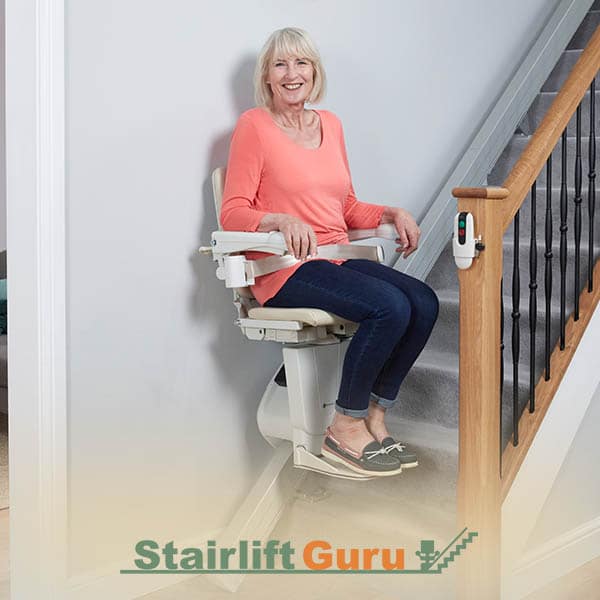
When moving looks costly or simply unwelcome, adapting the existing home becomes the practical alternative. The most common barrier in a typical house is the staircase, and a stairlift is one of the most straightforward ways to keep the whole home usable. Typical UK prices reported by industry sources start from around £2,000 for a straight stairlift, with curved models costing more because each rail is built to the shape of the stairs. You can compare the main cost factors on our stairlift prices guide. The point is that this choice does not depend on a line in the Budget. It depends on your stairs, your health and your plans for the next few years.
Why the decision to adapt is largely in your hands
It is easy to read a Budget preview and conclude that everything hinges on national policy. In reality, the routes to a safer home already exist and are not waiting on Wednesday’s announcement. In England, home adaptations are mainly arranged through local councils, usually after an assessment by an occupational therapist, and households that qualify can apply for help through the Disabled Facilities Grant. Our stairlift grants guide explains who is eligible and how the process works.
Those routes do carry waiting times in many areas, and the means test does not reach everyone, which is why a significant number of households choose to self-fund straightforward changes so they can get on with daily life sooner. Whatever the Chancellor says about grants or social care funding, the risk is treating a national promise as a reason to wait, when the staircase in front of you is already a daily hazard. If reform does bring more money into the system, that is welcome, but it tends to take years to move from pledge to delivery.
What to do around the Budget
If you are an older homeowner, the sensible approach is to let the Budget happen and then read the detail rather than the predictions. Once the announcements are confirmed, it is worth checking three things: whether energy support such as the Warm Home Discount has changed and whether you qualify, whether anything affects the cost of moving should you still be considering it, and whether home adaptation funding has shifted in any way. In the meantime, if stairs are becoming difficult, it is worth booking a council assessment, getting a couple of quotes so you understand the real cost, and making small safety changes such as better landing lighting and a second handrail that help straight away. A Budget comes once or twice a year. The decision to make your home work for you is one you can act on at any time.
Choosing a stairlift: our six guides
Independent UK guides on every stage of the decision and the install.
- Is it time for a stairlift? , The decision before you start. Signs, conversations, and what to try first.
- Types of stairlift , Straight, curved, narrow, outdoor, heavy-duty, standing. Which one fits your home.
- Stairlift prices , What stairlifts actually cost in the UK. By type, with what changes the price.
- Stairlift grants and funding , Disabled Facilities Grant, NHS, charity, finance. Who pays for what.
- Buy, rent, or reconditioned , The three routes compared, with a decision flowchart.
- Living with a stairlift , Install, servicing, repair, batteries, sell, remove. The full lifecycle.
 ChatGPT