
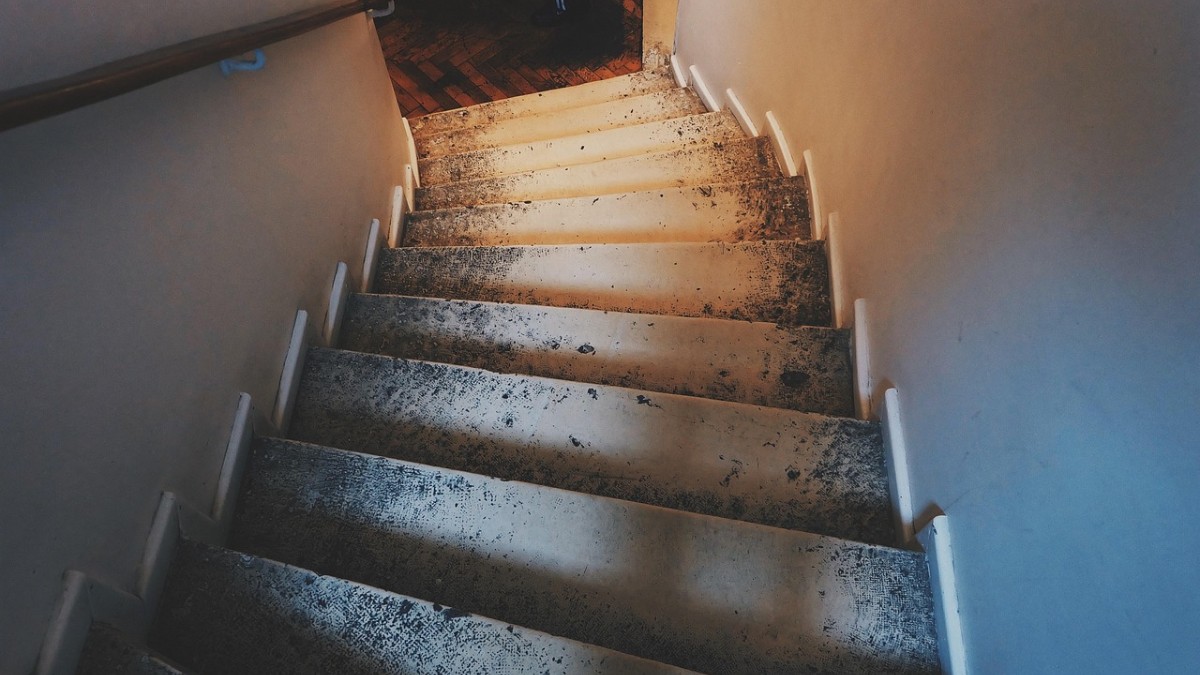
The clocks have not gone back yet, but autumn officially arrives on 22 September this year, and with it comes the season when older people are most at risk of a fall. Darker evenings, wet leaves underfoot and colder rooms all make everyday movement around the home harder, and the first day of autumn is also marked as Falls Prevention Awareness Day, when health services and charities across the UK focus attention on keeping older people steady on their feet. For anyone who finds the stairs a daily worry, the next few weeks are a sensible moment to take stock of home safety.
Why autumn and winter raise the risk of falls
The change of season affects the home in ways that are easy to overlook. Evenings draw in quickly from late September, so hallways, landings and staircases that felt perfectly safe in summer are suddenly navigated in poor light. When the clocks go back at the end of October, that shift becomes sharper still, with many people coming home or moving around the house in the dark.
Cold weather plays its part too. Stiff joints and chilly rooms make people less steady, and heavier winter clothing, slippers and trailing dressing gowns can catch on steps. Wet shoes bring moisture indoors onto hard floors, and condensation can leave tiled or laminate surfaces slick. None of these hazards is dramatic on its own, but together they explain why falls tend to rise as the year turns.
Stairs deserve particular attention. They are one of the highest-risk areas of any home, because a stumble on the stairs is far more likely to cause a serious injury than a trip on the level. For older people who are already finding the climb tiring or unsteady, the darker months can turn a manageable staircase into a genuine daily hazard.
We don’t sell or fit stairlifts. Quotes go to UK suppliers.
Quotes are free. We’re only paid if you buy: the supplier we introduced you to pays us a fee. How we are funded
Free, no obligation • UK-based suppliers only
The scale of the problem in the UK
Falls among older people are one of the most common and costly health issues in the country. According to Age UK, up to one in three people aged over 65, around 3.4 million people, has at least one fall a year, and falls are the most common cause of injury-related death in people over 75. The financial toll is significant as well, with Age UK estimating that falls among the over-65s cost the NHS in the region of £4.6 million a day.
The encouraging part of the picture is that falls are not an inevitable part of getting older. Evidence cited by Age UK suggests that programmes designed to improve strength and balance can reduce the risk of falling by as much as 55 per cent, and much of the risk in the home comes from hazards that can be removed or reduced. In other words, a fall is often preventable, and the home is one of the best places to start.
We don’t sell or fit stairlifts. Quotes go to UK suppliers.
Quotes are free. We’re only paid if you buy: the supplier we introduced you to pays us a fee. How we are funded
Making your home safer, room by room
A falls check does not need to be complicated. The aim is to look at the home through the eyes of someone who is less steady than they used to be, and to fix the small things before they cause an accident.
Lighting is the obvious place to begin as the evenings draw in. Make sure stairs and landings are brightly and evenly lit, fit a light switch at both the top and bottom of the staircase, and consider a plug-in night light for the route between the bedroom and the bathroom. Clear away trip hazards such as loose rugs, trailing cables and clutter on the steps, and check that stair carpet is fixed down firmly with no worn or lifting edges.
Handrails matter enormously on the stairs. A secure rail on at least one side, and ideally both, gives something reliable to hold, and grab rails by the front and back doors and in the bathroom help at the other points where people commonly slip. Well-fitting, supportive footwear worn around the house, rather than loose slippers, makes a surprising difference, as does keeping frequently used items within easy reach so there is no need to stretch or climb.
It is also worth looking beyond the home itself. A regular sight test keeps vision sharp for judging steps, and a medication review with a doctor or pharmacist can flag any tablets, or combinations of them, that cause dizziness or drowsiness. Gentle strength and balance activity, whether a local class or exercises recommended by a physiotherapist, is one of the most effective ways to stay steady over the long term.
When the stairs are the real barrier
Sometimes small fixes are not enough, and the staircase itself becomes the problem. If climbing the stairs has started to feel exhausting or frightening, or if a recent fall has knocked someone’s confidence, it is worth thinking about a more substantial change before winter sets in. Some households rearrange living space to bring a bedroom or bathroom downstairs, while others look at a stairlift so the stairs can be used safely again without the strain and risk of climbing.
The most useful first step is an assessment by an occupational therapist, who can look at the whole home and recommend what will genuinely help. A referral is available through your local council, and an occupational therapist can advise on everything from grab rails to larger adaptations. Where cost is a concern, the Disabled Facilities Grant can help meet the price of essential adaptations, including stairlifts, for people who are eligible, with local councils administering the scheme across the UK. You can read more about how to apply on our guide to stairlift grants.
Because council assessments and grant-funded work can take several months to arrange, starting the conversation now gives the best chance of having any changes in place before the darkest and coldest part of the year. It is also worth understanding the wider financial picture, both the human and NHS cost set out on our page about the cost of a fall in the UK, and the typical range of prices if you decide to arrange a stairlift privately, which you can explore on our stairlift prices guide.
A timely reminder
Autumn’s arrival, and the falls-prevention awareness activity that clusters around it, is a helpful prompt rather than a cause for alarm. A short walk around the house to improve the lighting, tidy the stairs and check the handrails can be done in an afternoon, and it makes a real difference through the harder months ahead. For anyone whose stairs have become a daily struggle, speaking to an occupational therapist and exploring what support is available is the surest way to head into winter feeling safer and more independent at home.
Choosing a stairlift: our six guides
Independent UK guides on every stage of the decision and the install.
- Is it time for a stairlift? , The decision before you start. Signs, conversations, and what to try first.
- Types of stairlift , Straight, curved, narrow, outdoor, heavy-duty, standing. Which one fits your home.
- Stairlift prices , What stairlifts actually cost in the UK. By type, with what changes the price.
- Stairlift grants and funding , Disabled Facilities Grant, NHS, charity, finance. Who pays for what.
- Buy, rent, or reconditioned , The three routes compared, with a decision flowchart.
- Living with a stairlift , Install, servicing, repair, batteries, sell, remove. The full lifecycle.
 ChatGPT