
Stairlift Removal: How It Works, What It Costs, and Your Options
Stairlift removal is typically required when a stairlift is no longer needed, a property is being sold, or it has broken down beyond repair. In most cases, removal is straightforward, but costs and options vary by stairlift type.
This guide explains how stairlift removal works in the UK, what you can expect to pay, and whether selling or disposing of the stairlift makes sense.
Professional stairlift removal costs £80 to £300 in the UK and typically takes one to two hours. Buy-back firms remove working straight lifts free and pay £100 to £500 for them.
Stairlift removal is the process of safely uninstalling a stairlift from a staircase and removing the rail, chair, and motor unit.
In the UK, stairlift removal typically takes one to two hours and leaves minimal marks on the stairs.
Stairlift Removal Costs in the UK
Professional stairlift removal costs £80 to £300. The spread depends on the lift type and how much making-good the staircase needs afterwards:
| Removal job | Typical cost |
|---|---|
| Straight stairlift, basic removal | £80 – £150 |
| Removal plus wall and tread repairs | £120 – £250 |
| Curved stairlift removal | £150 – £300+ |
| Removal by a buy-back company purchasing the lift | Usually free, plus payment to you |
The full breakdown, including disposal fees and regional variation, is in our stairlift removal cost guide.

Removal Time and Cost by Stairlift Type
The type of stairlift drives both the time on site and the price. These are typical UK figures for a removal carried out by a qualified engineer.
| Stairlift type | Typical time on site | Typical cost | What makes it different |
|---|---|---|---|
| Straight | 1 to 2 hours | £80 to £150 | One rail bolted to the treads. The simplest job, and the one a buy-back company will usually do free if it is taking the lift. |
| Curved | 2 to 4 hours, sometimes longer | £150 to £300 | The bespoke rail comes apart section by section and each section is lifted clear separately. The number of bends and landings drives the time. |
| Outdoor | 2 to 4 hours, sometimes longer | £150 to £350 | Weatherproofed fixings into stone, brick or concrete, heavier components, and an external electrical supply that has to be made safe. |
Add £120 to £250 to any of these if you want the walls and treads properly made good, beyond simply filling the holes. Access matters as much as type. A narrow hallway, a tight turn at the foot of the stairs or a first-floor flat all add time.
Five questions to ask before you book a removal
- What is the total cost? Not the starting price, the figure you will actually pay.
- Is filling the holes and tidying up included, or is that extra?
- Are disposal or recycling fees included in that number?
- How long will you be here? A quote that assumes two hours on a curved lift is optimistic.
- Is there a surcharge if the lift is curved, or for difficult access?
Get the answers in writing. Every dispute over a removal bill comes down to something that was agreed verbally and remembered differently.
If a buy-back company is purchasing the lift, removal is normally included at no cost whatever the type. Check what your stairlift is worth before paying anyone to take it away.
Free Stairlift Removal: When It Is Genuine
Working straight stairlifts under about ten years old have resale value. Because they’re buying stock, buy-back firms remove them free, and in that situation you should be paid £100 to £500 for the lift. Don’t settle for simply having it taken away.
See selling a stairlift and what your lift is worth before booking a paid removal. Some charities also collect donated lifts free. Be careful with firms offering free removal while insisting the lift is worthless. That pattern is covered in avoid stairlift removal scams.
When Do You Need a Stairlift Removed?
The usual triggers: the lift is no longer needed, or the property is being sold, cleared or re-let. Others are a lift that has failed beyond economic repair, or a new lift replacing it, in which case the installer normally handles the old one.
After a bereavement there’s no rush at all. Our guide to handling a stairlift after a bereavement takes the options gently.
How Stairlift Removal Works
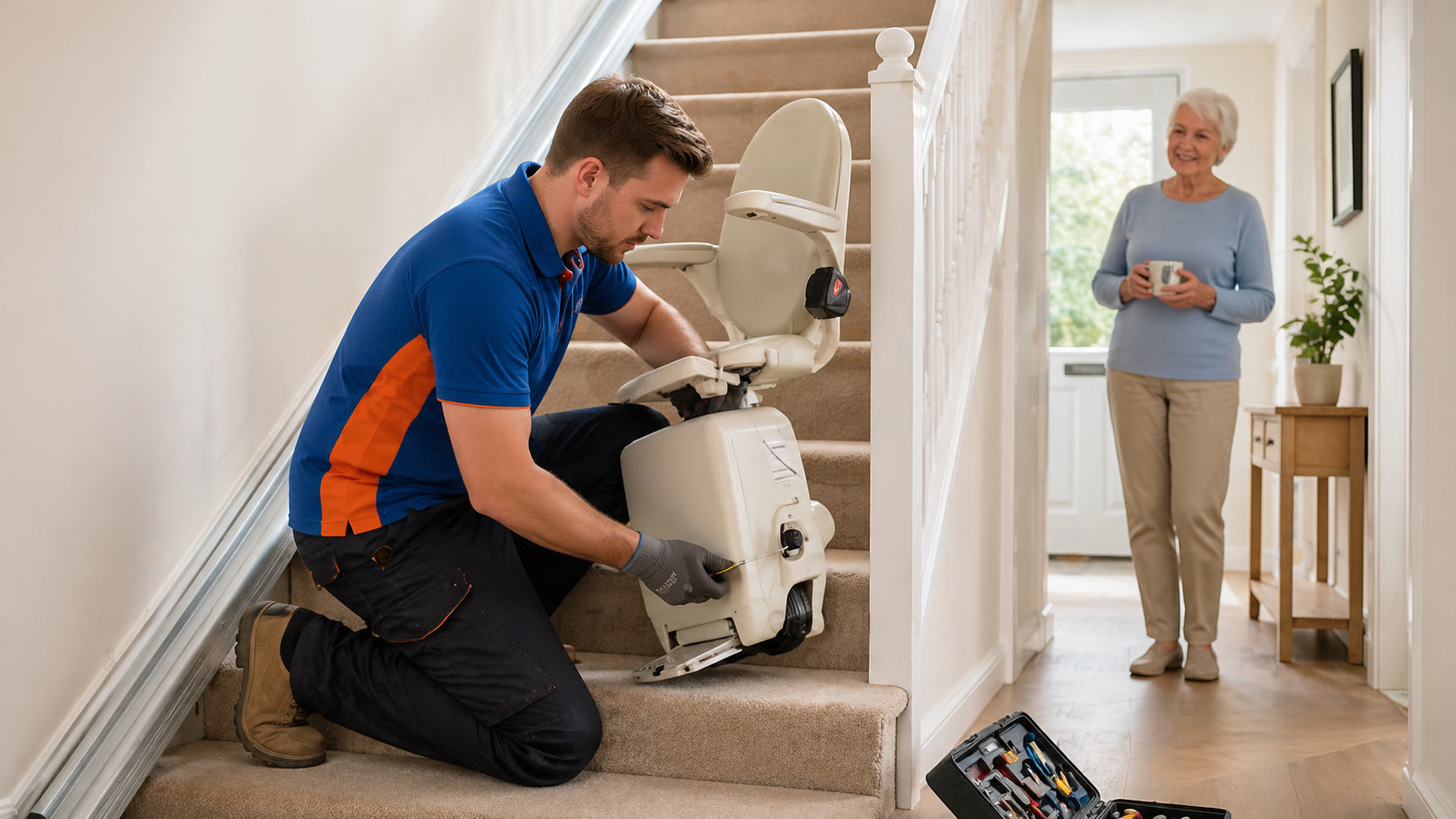
The engineer disconnects the power at the socket or spur, removes the chair and motor carriage, and unbolts the rail from the stair treads. Then they make the fixing points good.
Because stairlifts mount to the treads and leave the wall alone, structural damage is rare. The small screw holes in the treads are simple to fill. A straight lift takes one to two hours; curved lifts with longer rails can take three. The step-by-step process is in how stairlift removal works.
Removing Acorn, Brooks and Stannah Stairlifts
Removal works the same way across brands, with two practical notes.
Acorn and Brooks share the same modular rail system, which unbolts in sections. That makes DIY removal more tempting than it should be. Our Acorn stairlift removal guide explains the process and the pitfalls.
Stannah lifts are often removed by Stannah itself, which offers removal for its own installations and buy-back on some models. Whatever the brand, it’s worth asking the original installer first. No company is obliged to remove a lift it didn’t supply, though.
Removal vs Selling
Straight stairlifts in working order are usually worth selling instead of paying to remove. Buy-back firms collect free and pay £100 to £500 depending on age and model.
Curved stairlifts are the opposite case, because the rail was made for one staircase. Resale is rare, and paid removal or disposal is normally the realistic route. The seat and motor occasionally have parts value. What affects resale value explains where your lift sits.
If the Stairlift Is Broken
A dead lift still needs professional removal, and full resale is unlikely, though some firms pay a small amount for parts donors. Before booking removal, check whether repair makes sense: common faults such as batteries cost £80 to £300 to fix, far less than replacing the lift. Our stairlift repairs guide covers when repair beats removal.
Selling a House with a Stairlift
Ask your estate agent before arranging anything. Many buyers want clear stairs, and removal is agreed before exchange. For an ageing buyer pool, though, a fitted stairlift can be a selling point instead of a defect. If it does need to go, allow time. Booking removal in the last week before completion is the classic avoidable panic.
Common Removal Mistakes
- Do not pay to remove a sellable lift. Check its valuation first; buy-back removal is free.
- Do not expect resale value from a curved lift. The custom rail rarely has a second life.
- Do not leave it late in a house sale. Book removal when the sale is agreed, not the week of completion.
- Do not use a general handyman. Non-specialists damage treads, mis-handle batteries and destroy any resale value.
Key Takeaways
- Professional removal costs £80 to £300 depending on lift type and making-good
- Working straight lifts should be sold, not paid for: buy-back firms remove free and pay you
- Removal takes one to three hours and rarely damages the staircase
- Curved lifts have little resale value; budget for paid removal
- Check with your estate agent before removing a lift for a house sale
Where to Go Next
To choose between the original supplier, buy-back firms and specialists, see who can remove a stairlift. Exact pricing is in the removal cost guide. If the lift still works, start at the sell a stairlift hub, so removal pays you and not the other way round.
Stairlift Removal Frequently Asked Questions
How long does stairlift removal take?
Most stairlifts are removed within one to two hours.
Will stairlift removal damage the stairs?
Usually not. Minor screw holes may remain but are easily repaired.
Can I remove a stairlift myself?
This is not recommended. Stairlifts are heavy and electrically powered.
Is stairlift disposal included in removal?
Sometimes. Always check whether disposal is part of the quoted price.
We don’t sell or fit stairlifts. Quotes go to UK suppliers.
Quotes are free. We’re only paid if you buy: the supplier we introduced you to pays us a fee. How we are funded
Free, no obligation
Choosing a stairlift: our six guides
Independent UK guides on every stage of the decision and the install.
- Is it time for a stairlift? , The decision before you start. Signs, conversations, and what to try first.
- Types of stairlift , Straight, curved, narrow, outdoor, heavy-duty, standing. Which one fits your home.
- Stairlift prices , What stairlifts actually cost in the UK. By type, with what changes the price.
- Stairlift grants and funding , Disabled Facilities Grant, NHS, charity, finance. Who pays for what.
- Buy, rent, or reconditioned , The three routes compared, with a decision flowchart.
- Living with a stairlift , Install, servicing, repair, batteries, sell, remove. The full lifecycle.
Related data and research
- ›Consumer Satisfaction Survey Ratings and reviews across major UK brands