
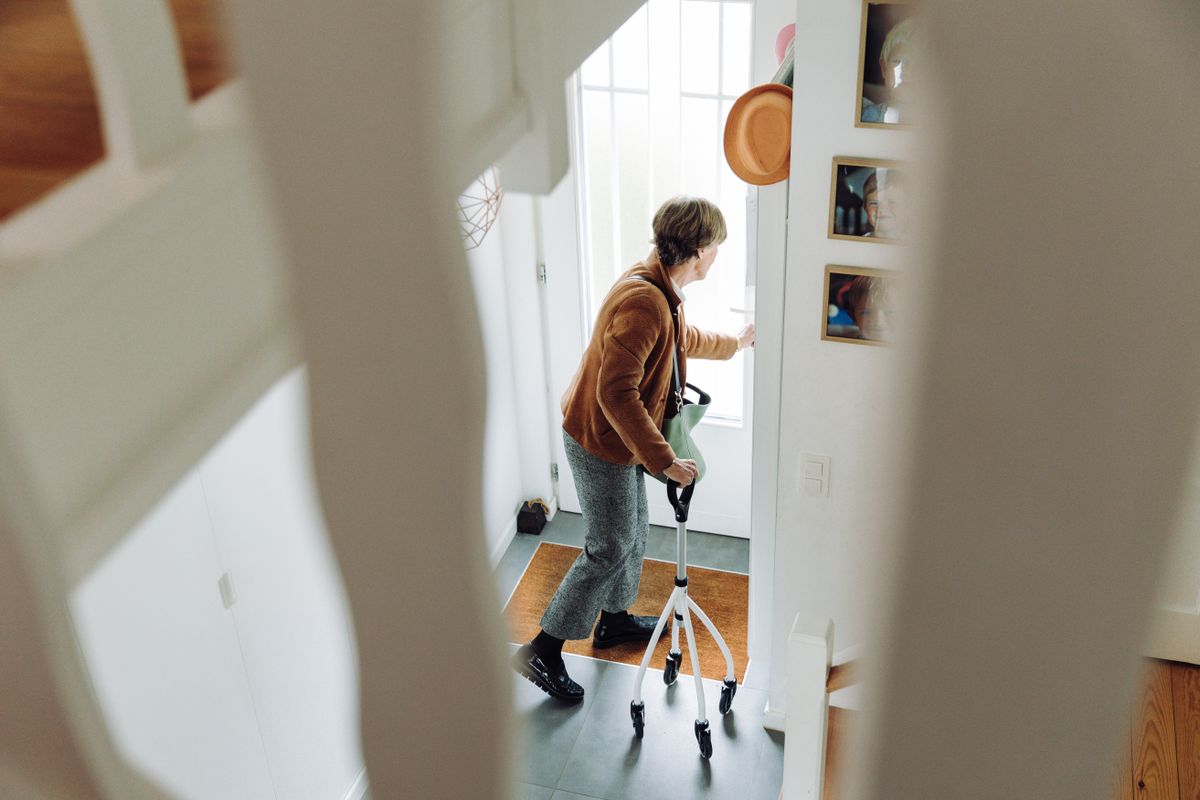
Falls at home are the single most common cause of injury-related death among people over 65 in the UK, and the latest national guidance has widened the net on who should be thinking about prevention. Updated advice from the National Institute for Health and Care Excellence (NICE) now covers everyone aged 65 and over, plus people aged 50 to 64 who carry extra risk. For UK homeowners and their families, that shift puts the safety of the home environment, including the stairs, firmly at the centre of the conversation.
This matters because falls prevention at home is no longer framed as something to worry about only in very old age. If you or a relative has a long-term condition such as arthritis, Parkinson’s, diabetes or the after-effects of a stroke, the guidance suggests it is worth acting sooner rather than later.
Why falls at home are such a serious issue
The scale of the problem is significant. Around a third of people over 65, and roughly half of people over 80, have at least one fall each year, according to research summarised by UK Research and Innovation. Falls are the most common cause of injury-related death in the over-65 age group, and they carry a heavy cost for the health service, estimated at more than £2.3 billion a year for the NHS.
Behind those numbers are everyday consequences that families know well. A single fall can lead to a fractured hip, a long spell in hospital, a loss of confidence, and in many cases a move away from the family home that nobody wanted. The stairs are a particular pressure point, because negotiating them safely draws on balance, strength and eyesight all at once.
We don’t sell or fit stairlifts. Quotes go to UK suppliers.
Quotes are free. We’re only paid if you buy: the supplier we introduced you to pays us a fee. How we are funded
Free, no obligation • UK-based suppliers only
What the updated falls guidance changed
NICE published its updated falls guideline, known as NG249, on 29 April 2025, replacing advice that dated back more than a decade. The new guidance makes several practical changes that are worth understanding.
The most notable is the expanded age range. Previously, detailed falls assessment for people aged 50 to 64 was largely limited to hospital settings. The updated guidance extends it to community and residential settings too, for anyone in that age band who has recognised risk factors. Those factors include long-term conditions that affect daily life, such as arthritis, dementia, diabetes or Parkinson’s disease, having had a stroke, or having a learning disability.
The guidance also encourages clinicians to simply ask people whether they have fallen in the past year, rather than relying on standalone scoring tools to predict risk. And it places real emphasis on assessing the whole picture, including balance, medication, underlying health conditions and, importantly, the home environment itself. That last point is where home adaptations enter the frame.
We don’t sell or fit stairlifts. Quotes go to UK suppliers.
Quotes are free. We’re only paid if you buy: the supplier we introduced you to pays us a fee. How we are funded
What the research says about home adaptations
There is now a growing body of evidence that adapting the home does more than add convenience. It can reduce the falls that send older people to hospital. Researchers linked to Health Data Research UK examined the electronic health records of more than 600,000 older people in Wales, of whom around 120,000 had received a home adaptation service through the charity Care and Repair Cymru.
The findings, published in 2022 and highlighted by UK Research and Innovation, were striking. People using the adaptation service were almost twice as likely to have fallen beforehand, which shows the service was reaching those most at risk. After receiving adaptations, the rate of falls among those clients fell by around 3 per cent per quarter. The adaptations studied included measures many families will recognise, such as fitting a stairlift, adding a grab rail or bath lift, widening doorways, lowering kitchen worktops and installing an outdoor ramp.
The researchers suggested this strengthens the case for offering home adaptations proactively, rather than waiting until after a serious fall has already happened. For families weighing up whether to make changes now or later, that is a meaningful signal.
Practical steps to reduce falls at home
You do not need to wait for a hospital admission to start improving safety at home. A sensible first step is a home assessment by an occupational therapist, which your local council can arrange. They will walk through the property with you, identify the specific hazards, and recommend adaptations suited to your needs and the layout of your home.
Common measures that support falls prevention at home include improving lighting on stairs and landings, fitting secure handrails on both sides of the staircase, removing trip hazards such as loose rugs and trailing cables, and adding grab rails in the bathroom. Where the stairs themselves have become the main difficulty, a stairlift removes the need to climb them at all, which is why it features so often in adaptation programmes. Our guide to stairlift safety explains how modern models are designed to be used securely day to day.
Cost is understandably a concern, but help is available. Depending on your circumstances and a means test, you may qualify for a Disabled Facilities Grant towards the cost of adaptations, including a stairlift. You can read more about the funding routes on our stairlift grants page, and if you want a sense of typical costs before applying, our stairlift prices guide sets out the ranges drawn from published UK prices.
Looking ahead
The direction of travel in national guidance is clear. Falls prevention is being treated as something to plan for earlier, with the home environment recognised as a key part of the solution rather than an afterthought. For older homeowners and the adult children and carers who support them, the practical message is encouraging: relatively straightforward changes to the home can lower the risk of a serious fall, and there is now solid evidence to back that up.
If the stairs have become a worry in your household, the sensible next step is to arrange an occupational therapy assessment through your council and to explore what adaptations, and what funding, might apply. Acting before a fall happens, rather than after, is exactly what the latest guidance and research point towards.
Prefer to watch? Our video guide covers the key points:
Choosing a stairlift: our six guides
Independent UK guides on every stage of the decision and the install.
- Is it time for a stairlift? , The decision before you start. Signs, conversations, and what to try first.
- Types of stairlift , Straight, curved, narrow, outdoor, heavy-duty, standing. Which one fits your home.
- Stairlift prices , What stairlifts actually cost in the UK. By type, with what changes the price.
- Stairlift grants and funding , Disabled Facilities Grant, NHS, charity, finance. Who pays for what.
- Buy, rent, or reconditioned , The three routes compared, with a decision flowchart.
- Living with a stairlift , Install, servicing, repair, batteries, sell, remove. The full lifecycle.
 ChatGPT