

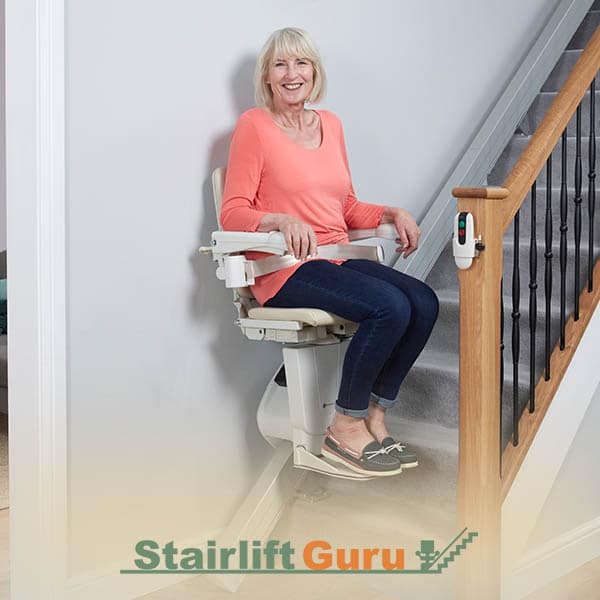
Today’s stairlifts are improving rapidly due to an ageing global population, increased demand for ageing-in-place solutions, advances in smart home technology, and greater focus on dignity, independence, and energy efficiency. Modern stairlifts already look very different from early models, and future designs are expected to move even further away from the “clinical” look of the past.
Future stairlifts will not just help people move between floors. They are expected to become smarter, greener, safer, and better integrated into home life, improving both accessibility and everyday independence.
The Direction of Travel: From Practical Aid to Smart Home Mobility
Today’s stairlifts already include impressive features: obstacle sensors, smooth start/stop movement, swivel seats, and battery backup systems. The biggest change ahead is not that stairlifts exist, it is that they will feel less like specialist equipment and more like a normal part of a modern home, much like smart heating or automated lighting.
Expect future stairlifts to focus on:
- Personalised user experience through AI
- Better accessibility for more mobility needs
- Lower energy consumption
- Enhanced safety and security
- Sleeker, less intrusive design
AI-Powered Stairlifts: Mobility That Adapts to the User
AI is likely to play a major role in how stairlifts operate. Rather than relying solely on manual controls, stairlifts could learn user preferences and respond to mobility needs in real time.
Adaptive movement: The lift can automatically adjust speed, start/stop sensitivity, and seat positioning based on the user’s steadiness that day. If someone seems tired or unsteady, the system may slow down and prioritise smoother movement.
User recognition: Stairlifts can identify the user and load personalised settings such as preferred speed, seat height, and swivel behaviour without requiring adjustments each time.
Predictive maintenance: Sensors and AI can detect early warning signs of wear and automatically flag issues before breakdowns, reducing emergency call-outs and downtime.
Importantly, future stairlifts will still need to be simple to use, with intuitive controls that work well for people with limited dexterity.
Smart Home Integration
Stairlifts will not be standalone devices. They will operate as part of a connected home system, improving both convenience and safety.
Voice control: Users may be able to call the stairlift, send it to a floor, or stop it instantly using voice commands, ideal for people with limited strength or dexterity.
Automation with lighting: The stairlift could trigger stairwell lights automatically when someone approaches the stairs, reducing trip hazards.
Connected safety monitoring: Sensors could send alerts to a phone or caregiver system if something unusual occurs, for example repeated stops, battery issues, or a user struggling to transfer safely.
User authentication: PIN codes or identification systems to prevent unauthorised use in shared homes.
Sustainable and Energy-Efficient Stairlifts
Sustainability is becoming a core design priority. Many modern stairlifts already use rechargeable battery systems, but future models are expected to go further.
Lithium-ion batteries: Longer life, faster charging, better reliability, and lower lifetime environmental impact than older battery systems.
Ultra-efficient motors: Quieter, smoother motors that use minimal energy and reduce wear.
Sustainable materials: More recyclable or responsibly sourced components, without sacrificing strength or safety.
This makes stairlifts more reliable during power cuts and more environmentally responsible.
Greater Comfort, Accessibility, and Safety
Auto-adjust seating: Seats and armrests could adjust automatically to fit the user’s height, posture, and preferred position.
Better options for different mobility needs: In addition to seated models, standing and perch stairlifts are likely to improve and offers compact solutions for people who struggle to bend or sit comfortably.
Smarter sensors: Enhanced obstacle detection, posture monitoring, and real-time safety feedback.
Enhanced transfer safety: Improvements in swivel seats, secure locking positions, and stable footrest platforms to reduce risk when getting on or off.
Platform-style stairlifts that allow users to remain in their wheelchair, and hybrid designs that sit between stairlifts and home lifts, could significantly expand who stairlifts are suitable for.
More Compact and Stylish Designs
Stairlifts are increasingly expected to blend into the home rather than stand out. Design will likely be a major selling point, not an afterthought.
Slimmer profiles: Seats that sit closer to the wall and take up less space when folded.
Cleaner rails and tracks: Rail systems designed to look less industrial, with smoother finishes and better integration into modern interiors.
Discreet fold-away options: More compact folding mechanisms, possibly even partially recessed designs in homes where space and aesthetics are priorities.
The aim is simple: mobility support without making the home feel “medical”.
While stairlifts already follow a fixed rail, future models could become more autonomous in how they respond to user needs and household routines:
- Automatically travelling to a preferred parking location when not in use
- Adjusting ride behaviour based on weight distribution or movement patterns
- Stopping at pre-set points (useful in multi-landing staircases)
- Smoother handling of tight turns on curved staircases using advanced swivel and motion control
Currently, stairlifts are designed for one user at a time. Future designs may better support shared use in family homes, with adjustable settings for different users and improved safety features for carers or helpers. The focus will remain on safety first, with flexibility added where appropriate.
Maintenance and Repairs
As stairlifts become more advanced, maintenance is likely to become more proactive:
- Self-diagnostic systems that detect issues early
- Automatic service reminders
- Remote troubleshooting to reduce home visits
- Faster repairs through modular components
The goal will be high reliability with fewer disruptions, especially important for users who rely on their stairlift daily.
Summary: The Future of Stairlifts
The next generation of stairlifts will be more intelligent, efficient, and inclusive than ever before. As technology advances and demand grows, stairlifts will continue to evolve, improving the quality of life while preserving dignity and independence.
Most importantly, these innovations will continue to support the same core purpose: helping people stay independent, safe, and comfortable at home for longer.
If you are considering a stairlift today, it is reassuring to know that modern models already benefit from many of these advancements, and future upgrades will only improve them.
If you are interested in where stairlift technology is headed, our complete stairlift advice hub covers today’s trends and what to expect tomorrow.
You might also find our how stairlifts are changing lives beyond the elderly article helpful for understanding broader impact and future use cases.
Watch Our Video
Choosing a stairlift: our six guides
Independent UK guides on every stage of the decision and the install.
- Is it time for a stairlift? , The decision before you start. Signs, conversations, and what to try first.
- Types of stairlift , Straight, curved, narrow, outdoor, heavy-duty, standing. Which one fits your home.
- Stairlift prices , What stairlifts actually cost in the UK. By type, with what changes the price.
- Stairlift grants and funding , Disabled Facilities Grant, NHS, charity, finance. Who pays for what.
- Buy, rent, or reconditioned , The three routes compared, with a decision flowchart.
- Living with a stairlift , Install, servicing, repair, batteries, sell, remove. The full lifecycle.
 ChatGPT