
Wider guide: see Living with a stairlift, the full lifecycle from install to removal.
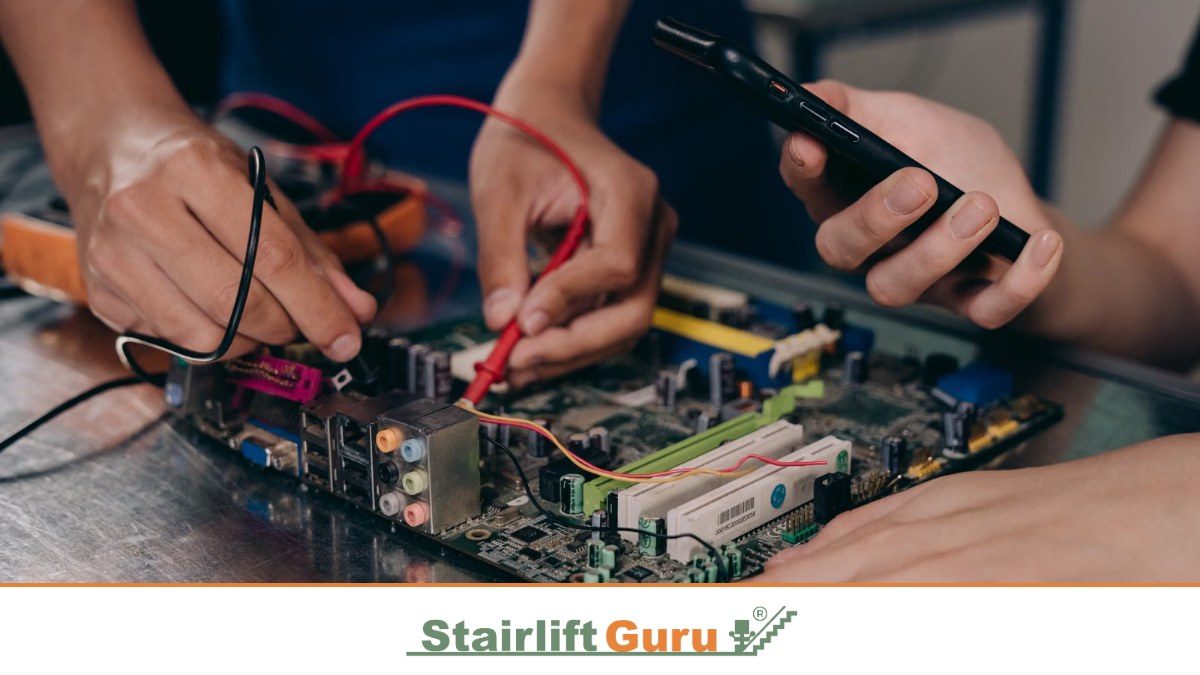
A stairlift relies on several key components working together smoothly. Understanding stairlift motors, tracks, and wear parts helps explain why regular stairlift servicing matters and how wear over time can affect performance.
This page explains what these parts do, how they wear, and how servicing helps keep them in good condition.

Key Takeaways
- Stairlifts rely on motors, tracks, and moving parts
- Wear is normal with regular use
- Servicing checks alignment and performance
- Early detection prevents breakdowns
- Most wear parts are replaceable
The Short Answer: What Parts Wear Over Time?
The parts most affected by wear include:
- The motor
- Rollers and gears
- The rail (track) contact points
- Bearings and drive components
Wear happens gradually and is usually manageable.
Stairlift Motors: What They Do
The motor:
- Powers the movement of the stairlift
- Controls speed and smoothness
- Works with the gearbox and drive system
Motors are designed to be reliable but still need monitoring.
How Motors Wear
Over time, motors may experience:
- Reduced efficiency
- Increased noise
- Heat-related wear
Servicing checks motor performance before failure occurs.
Stairlift Tracks (Rails): What They Do
The track:
- Guides the stairlift along the stairs
- Supports weight and alignment
- Ensures smooth, stable travel
Tracks are fixed to the stairs, not the wall.
Track Wear and Alignment
Track issues may include:
- Misalignment
- Wear on contact surfaces
- Build-up of dirt or debris
Even small alignment issues can affect performance.
Common Stairlift Wear Parts
Wear parts are components designed to:
- Absorb friction
- Protect major components
They include:
- Rollers
- Gears
- Bearings
- Drive strips or racks
These parts are inspected during servicing.
How Servicing Protects Wear Parts
During servicing, engineers:
- Inspect wear parts for damage
- Adjust alignment
- Replace worn components if needed
This prevents bigger failures later.
Signs Motors or Wear Parts Need Attention
Watch for:
- Unusual noises
- Jerky movement
- Slower operation
- Vibration
These signs suggest servicing is needed.
Are These Parts Repaired or Replaced?
Often:
- Small wear parts are replaced
- Motors are repaired or replaced if necessary
Replacement decisions depend on condition and cost.
How Long Do Motors and Tracks Last?
With proper servicing:
- Motors can last many years
- Tracks often last the lifetime of the stairlift
Regular stairlift maintenance is key.
outdoor stairliftss & Wear
Outdoor stairlifts:
- Face moisture and temperature changes
- May experience faster wear
Regular inspection is essential.
Rental Stairlifts: Who Handles Wear?
For rental stairlifts:
- Wear and tear is expected
- Repairs and replacements are handled by the provider
Users should report issues promptly.
Why Understanding Wear Matters
Understanding wear helps you:
- Recognise early warning signs
- Appreciate the value of servicing
- Avoid unexpected breakdowns
Maintenance prevents bigger problems.
Get Clear Guidance from Stairlift Guru
At Stairlift Guru, we explain stairlift components clearly so you know how motors, tracks, and wear parts affect performance and reliability.
Noticed Changes in Performance?
If your stairlift isn’t running as smoothly as it should, understanding wear helps you take action early.
We’re here to help with no pressure and no obligation.
If you want a full overview of how maintenance protects key stairlift components, our main guide to stairlift servicing explains why regular checks are important for reliability and safety.
You may also want to read what causes stairlift breakdowns to understand how worn parts and mechanical issues can lead to faults or sudden failures.
For help recognising early signs of component wear, see warning signs your stairlift needs servicing which explains the symptoms that often appear before major problems develop.
Prefer to watch? Our video guide covers the key points:
Choosing a stairlift: our six guides
Independent UK guides on every stage of the decision and the install.
- Is it time for a stairlift? , The decision before you start. Signs, conversations, and what to try first.
- Types of stairlift , Straight, curved, narrow, outdoor, heavy-duty, standing. Which one fits your home.
- Stairlift prices , What stairlifts actually cost in the UK. By type, with what changes the price.
- Stairlift grants and funding , Disabled Facilities Grant, NHS, charity, finance. Who pays for what.
- Buy, rent, or reconditioned , The three routes compared, with a decision flowchart.
- Living with a stairlift , Install, servicing, repair, batteries, sell, remove. The full lifecycle.
 ChatGPT