
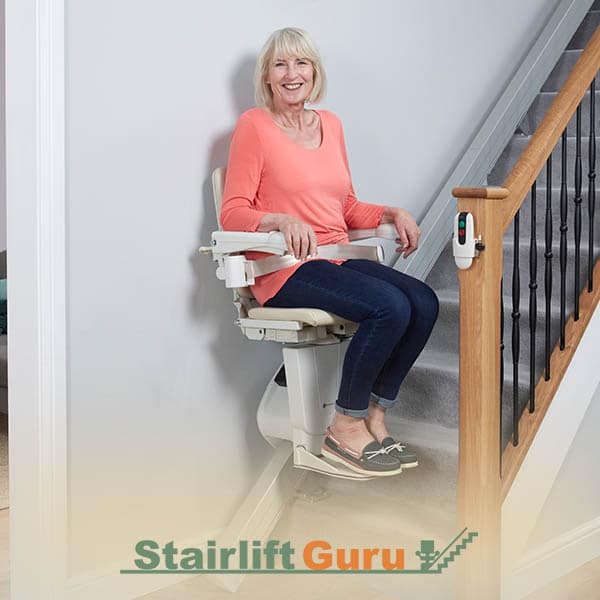
Four kinds of people can remove a stairlift safely. They are the company that installed it, an independent stairlift engineer, a buy-back firm collecting a lift it has bought, and the rental provider’s own team for rented units.
You can technically remove one yourself, but it’s rarely wise. A stairlift is heavy, mains-connected and bolted to the stair treads. Mistakes cost more than the £80 to £300 a professional charges.
This guide compares each route, including the one where removal is free. For prices in detail, see our removal cost guide.
Key takeaways
- Professional removal costs £80 to £300 and takes one to three hours for most lifts.
- Selling the lift to a buy-back company usually makes removal free, and pays you £100 to £500 on top.
- DIY removal risks injury, staircase damage, and voided warranty or insurance.
- Rented stairlifts must be removed by the rental provider; it is in the agreement and usually free.
We don’t sell or fit stairlifts. Quotes go to UK suppliers.
Quotes are free. We’re only paid if you buy: the supplier we introduced you to pays us a fee. How we are funded
Free, no obligation • UK-based suppliers only
The short answer: who should remove your stairlift?
If the lift has resale value, a buy-back company is the best answer. Their engineers remove it as part of the purchase, so you get paid instead of billed.
If it has no value, any qualified stairlift engineer can remove it for £80 to £300. That includes the original installer, who will know the model well.
If the lift is rented, ring the provider. Removal at the end of a rental is their job and normally included in the agreement. DIY comes last, for good reasons covered below.
The four professional routes
The original installer. Firms like Stannah, Acorn and Handicare, and the local dealers who fit their lifts, all offer removal. They know the fixings and wiring of their own models, and some offer buy-back or disposal in the same visit. Expect the standard £80 to £300 depending on the lift and your location.
Independent stairlift engineers. Any competent stairlift engineer can remove any brand, because the mechanics are similar across models. Independents are often the cheapest paid option and the most flexible on timing.
Check they carry public liability insurance. Also check they’ll take the lift away instead of leaving it in your hallway.
Buy-back companies. Where the lift has value, the buyer’s engineers collect it as part of the sale, and the removal is free because the unit is worth money to them. Most straight lifts from major brands qualify. Start with a valuation before booking any paid removal; our guide to selling a stairlift explains the process.
The rental provider. A rented lift belongs to the provider, so removal is theirs to do and DIY is not permitted under the agreement. Collection at the end of a rental is normally free; confirm when you give notice.
What professional removal involves
An engineer isolates the power and disconnects the charging points. Next they remove the carriage, the heavy part, which often weighs 50kg or more. Then they unbolt the rail from the stair treads in sections and carry everything out.
For a straight lift the whole job takes one to three hours. Curved rails take a little longer because they need dismantling into more sections.
All that’s left is small screw holes in the treads, which fill invisibly under carpet. The rail bolts to the stairs, so your walls are untouched. Our guide to removal damage shows what to expect.
Why DIY removal usually goes wrong
Three hazards do the damage.
The first is weight. Stairlift carriages are far heavier than they look, and carrying one down a staircase is a lifting injury waiting to happen. Then there’s electricity: the lift connects to the mains through charging points that must be isolated properly.
The staircase itself is the third. Careless removal splits treads and leaves oversized holes, which cost more to repair than hiring removal would.
There are paperwork risks too. You could void the warranty on a lift you plan to sell, or end up in an insurance argument if someone is hurt. Against all that, the £80 to £300 professional fee is cheap.
If cost is why you’re considering DIY, get a valuation first. A saleable lift makes removal free.
How long removal takes
A straight stairlift comes out in one to three hours. The power is isolated, the carriage lifted off, the rail unbolted in sections and the holes left tidy.
A curved lift takes longer, typically half a day. Its custom rail has to be dismantled into more pieces and carried out carefully around its own bends. Outdoor lifts sit in between, since weatherproof housings and outdoor wiring add a little time.
None of these jobs should stretch to a full day on a domestic staircase. If a firm quotes longer, it should explain why.
Before the engineer arrives
Three small preparations speed up the visit.
If the lift runs, leave it on charge and working, because a buyer or refurbisher will want to test it. Clear the hallway and landing so there’s somewhere to set components down.
Decide in advance what should happen to the unit, whether that’s sale, donation or disposal, so the engineer brings the right paperwork. If you’re selling it, have the remotes, keys and any documents ready to hand over.
Disposal, donation and recycling
A removed lift does not have to go to landfill. Buy-back firms refurbish or strip lifts for parts. Some charities and community equipment schemes accept donated lifts of standard types. And metal-and-electronics recycling handles the rest under WEEE rules; most removal firms include responsible disposal in their fee. Ask whichever route you choose what happens to the unit afterwards.
Getting it arranged
Start with a free valuation to learn whether your lift qualifies for free removal with payment. If it does not, get two or three removal quotes, confirm insurance and disposal, and book; most jobs happen within the week. Stairlift Guru connects you with vetted removal and buy-back specialists across the UK and may earn a referral fee, which never changes your quote or offer.
The video below gives a helpful overview:
Choosing a stairlift: our six guides
Independent UK guides on every stage of the decision and the install.
- Is it time for a stairlift? , The decision before you start. Signs, conversations, and what to try first.
- Types of stairlift , Straight, curved, narrow, outdoor, heavy-duty, standing. Which one fits your home.
- Stairlift prices , What stairlifts actually cost in the UK. By type, with what changes the price.
- Stairlift grants and funding , Disabled Facilities Grant, NHS, charity, finance. Who pays for what.
- Buy, rent, or reconditioned , The three routes compared, with a decision flowchart.
- Living with a stairlift , Install, servicing, repair, batteries, sell, remove. The full lifecycle.
 ChatGPT