

Some of the world’s leading falls researchers are gathering in Manchester this week for the 3rd World Falls Congress, a global meeting hosted by the British Geriatrics Society from 24 to 26 June. For older homeowners and the families who support them, the science being shared at events like this matters far beyond the lecture theatre, because so much of what reduces falls happens inside our own homes.
Falls are one of the biggest public health challenges facing an ageing UK population, and a growing body of research points to a reassuring conclusion: practical changes to the home, including stairlifts, handrails and other adaptations, can make a measurable difference. Here is what the latest thinking means for anyone weighing up how to stay safe at home.
A global gathering on a very British problem
The World Falls Congress brings together more than 800 clinicians, physiotherapists, occupational therapists and researchers from around the world. Held this year at the University of Manchester as a hybrid in-person and online event, it focuses on the prevention and management of falls in older people, with keynote talks, workshops and sessions on best practice. Previous congresses were held in Malaysia and Australia, so hosting it in the UK puts a spotlight on a challenge that costs the country dearly.
The scale is significant. Research summarised by Open Access Government estimates that falls affect around a third of people over 65 in the UK each year and cost the public purse in the region of £4.4 billion annually. Falls are also the leading cause of injury-related death in older adults. Behind those figures are real consequences: a single fall can lead to a hospital stay, a loss of confidence, and in many cases a permanent change in how independently someone is able to live.
We do not sell or install stairlifts. Quotes go to UK suppliers.
If you buy a stairlift from a supplier we introduced you to, that supplier pays us a fee. Requesting quotes is free and we are not paid for the request itself. How we are funded
Free, no obligation • UK-based suppliers only
What the research keeps showing about home adaptations
One of the clearest pieces of UK evidence comes from a large study led by Population Data Science at Swansea University, published in the journal Age and Ageing. Researchers linked the health records of 657,536 people aged 60 and over living in Wales between 2010 and 2017, including more than 120,000 who had received a home adaptation service through the charity Care & Repair Cymru.
The findings, reported by Health Data Research UK, were encouraging. After a home adaptation, the rate of falls among clients fell by around 3% per quarter. The authors concluded that these interventions are effective and that the evidence strengthens the case for offering them proactively, rather than waiting until after someone has already fallen. In plain terms, the research supports what many occupational therapists have long argued: adapting the home early is one of the most practical ways to keep people safe and independent.
We do not sell or install stairlifts. Quotes go to UK suppliers.
If you buy a stairlift from a supplier we introduced you to, that supplier pays us a fee. Requesting quotes is free and we are not paid for the request itself. How we are funded
From reacting to falls to predicting them
A theme running through current falls research is the shift from reacting to falls towards preventing them before they happen. UK Research and Innovation has supported work on a machine learning algorithm designed to flag when an individual has an elevated risk of falling, which could one day help health services target support to the people who need it most.
Alongside this, digital tools are widening access to prevention. Strength and balance programmes, long known to reduce falls, are increasingly being delivered through apps that guide older adults through personalised exercises at home. These approaches do not replace home adaptations, but they sit naturally alongside them, addressing both the person and their environment. The broader ambition, set out by public health campaigners, is to prevent a million falls in the UK by 2030, and the home is central to that goal.
What this means for you at home
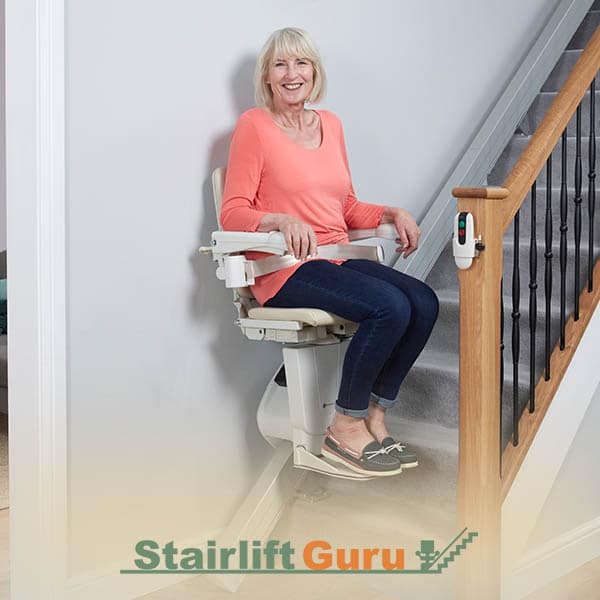
If you or a relative are concerned about falls, the research points to a few sensible steps. The first is an assessment. An occupational therapist can review how someone moves around their home and recommend specific changes, from grab rails and improved lighting to a stairlift where the stairs have become difficult or unsafe. Stairs are one of the highest-risk areas in any home, and a stairlift offers a stable, seated way to move between floors without attempting them on foot.
It also helps to understand what support is available. Minor adaptations are often arranged quickly and at little or no cost through local councils, while larger works may qualify for funding. Our guide to stairlift grants explains the Disabled Facilities Grant and other routes to help with costs, and our overview of home adaptations covers the wider range of changes that can make a home safer. For those weighing up the investment, our stairlift prices guide sets out typical UK price ranges drawn from published UK prices.
The takeaway from a week of falls research is a hopeful one. Falls are common, but they are not an inevitable part of growing older. The evidence increasingly shows that thoughtful changes to the home, made early and matched to the person’s needs, can keep people on their feet and living independently for longer. With the world’s falls experts meeting on UK soil this week, there has rarely been a better moment to look at your own home and ask what small changes might make the biggest difference.
Prefer to watch? Our video guide covers the key points:
Choosing a stairlift: our six guides
Independent UK guides on every stage of the decision and the install.
- Is it time for a stairlift? , The decision before you start. Signs, conversations, and what to try first.
- Types of stairlift , Straight, curved, narrow, outdoor, heavy-duty, standing. Which one fits your home.
- Stairlift prices , What stairlifts actually cost in the UK. By type, with what changes the price.
- Stairlift grants and funding , Disabled Facilities Grant, NHS, charity, finance. Who pays for what.
- Buy, rent, or reconditioned , The three routes compared, with a decision flowchart.
- Living with a stairlift , Install, servicing, repair, batteries, sell, remove. The full lifecycle.
 ChatGPT