


The way landline telephones work in the UK is about to change for good, and the deadline matters far more to older homeowners than the technical language suggests. In January 2027 the old copper telephone network will be switched off and replaced by a digital system that carries calls over the internet. For most people that simply means a different sort of phone connection, but for the roughly two million people who rely on a personal alarm or telecare device, it is a change worth acting on now.
If you, or a parent or relative, wear a pendant alarm or keep a fall detector by the bed, this is the moment to check that it will still call for help once the switchover reaches your home. The good news is that the steps involved are straightforward, and your providers are obliged to support you through them.
What is the landline switch-off?
The change has several names. You may hear it called the PSTN switch-off, where PSTN stands for the Public Switched Telephone Network, or you may see it described as Digital Voice, the digital switchover, or the move to VoIP, which means Voice over Internet Protocol. They all refer to the same thing: the retirement of the analogue copper network that has carried home phone calls for decades, and its replacement with a broadband-based digital service.
According to Citizens Advice, the analogue network is scheduled to be switched off in January 2027. The reason older alarms are caught up in this is simple. Many telecare units were designed to dial a monitoring centre through the analogue line, and a device built only for that older network may not connect reliably once the line becomes digital.
We do not sell or install stairlifts. Quotes go to UK suppliers.
If you buy a stairlift from a supplier we introduced you to, that supplier pays us a fee. Requesting quotes is free and we are not paid for the request itself. How we are funded
Free, no obligation • UK-based suppliers only
Why telecare alarms are affected
Telecare covers the personal alarms, pendant buttons, fall detectors and linked sensors that let someone summon help quickly if they have a fall or feel unwell at home. When the button is pressed, the unit places a call to a monitoring centre, and that call has traditionally travelled over the analogue phone line.
The scale of the issue is significant. The government’s Telecare National Action Plan (February 2025) estimates that around 2 million people in the UK use telecare, and progress on upgrading them has been uneven. One market analysis reported that, as of early 2026, less than a quarter of the UK telecare market had fully moved to digital systems ahead of the switch-off. That leaves a large number of households where the alarm has not yet been checked or replaced, which is exactly why charities and providers are urging people to act early rather than wait for the deadline.
We do not sell or install stairlifts. Quotes go to UK suppliers.
If you buy a stairlift from a supplier we introduced you to, that supplier pays us a fee. Requesting quotes is free and we are not paid for the request itself. How we are funded
What you should do now
The single most important step, according to Citizens Advice, is to tell your landline provider that you use a personal alarm or telecare device. Their contact details will be on your phone bill or website. Once they know, they can make sure you are only switched over when your alarm is confirmed to work, and they should ask you to confirm whether you have telecare before any change is made. If they do not ask, tell them anyway.
Next, contact your telecare provider and ask whether your equipment is compatible with a digital phone line. If it is compatible, your alarm should continue to work as normal after the switchover. If it is not, you may be able to fit an adaptor to your existing unit, or you may need to upgrade to a newer model. Telecare providers should no longer be selling analogue-only units, so any new system you are offered should already be digital-ready. When checking a product description, look for terms such as IP, VoIP-compatible, digital-ready or cloud-based.
It is also worth nominating a trusted friend or family member to deal with the switch on your behalf if that would be easier. You are entitled to do this, and many people find it reassuring to have a relative on hand when the engineer visits.
Backup power and testing
One genuine difference between the old and new systems is what happens during a power cut. An analogue line could keep working when the electricity went off, but a digital line depends on your broadband router, which needs power. To address this, providers offer a backup battery unit for the phone line so that a telecare alarm can still make an emergency call if the power fails, and the major broadband companies provide these free of charge to customers who are considered vulnerable.
When your line is switched, your provider should send an engineer to carry out the work. Ask that engineer to test your telecare unit on the new digital line before they leave, ideally with a relative present. If any problem appears after the switch, you can complain to your phone provider, who should return and fix it promptly. Remember too that other devices linked to your phone line, such as burglar or fire alarms, may also be affected, so it is sensible to ask those providers the same questions.
A word on scams
Sadly, any large change like this attracts fraudsters. Citizens Advice is clear that your home phone provider will never ask you to pay to switch to a digital line, so if someone contacts you demanding payment, even if they know your name and address, it is a scam. Do not share your bank details or click any links, and report it if you can.
Planning ahead at home
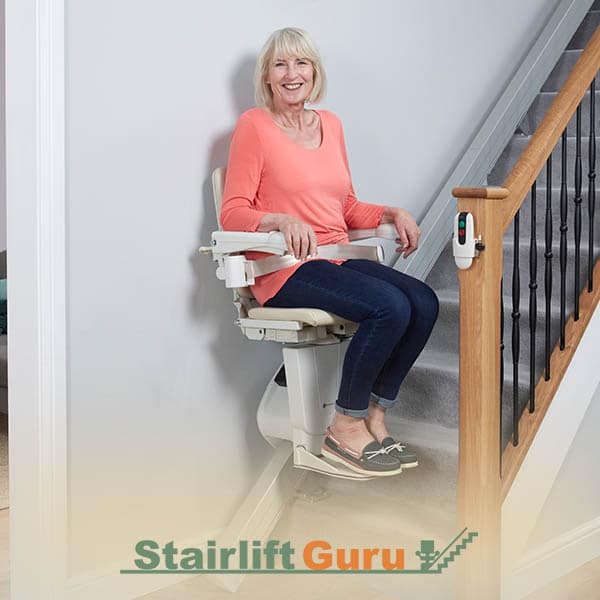
The switchover is a useful prompt to think about home safety more broadly. A personal alarm is one layer of protection, and many households combine it with practical adaptations that reduce the risk of a fall in the first place, from grab rails and improved lighting to a stairlift where the stairs have become difficult. If you are weighing up the cost of changes like these, our guide to stairlift prices sets out typical UK price ranges, based on published UK prices, and you may also be able to get help towards the cost through a Disabled Facilities Grant, which we explain in our overview of stairlift grants.
The landline switch-off does not need to be a worry. With a couple of phone calls now, to your landline provider and your telecare provider, you can confirm that the alarm you rely on will keep working long after January 2027, and free up your attention for the more important business of staying safe and independent at home.
This video explains how the digital switchover affects personal alarm users:
Choosing a stairlift: our six guides
Independent UK guides on every stage of the decision and the install.
- Is it time for a stairlift? , The decision before you start. Signs, conversations, and what to try first.
- Types of stairlift , Straight, curved, narrow, outdoor, heavy-duty, standing. Which one fits your home.
- Stairlift prices , What stairlifts actually cost in the UK. By type, with what changes the price.
- Stairlift grants and funding , Disabled Facilities Grant, NHS, charity, finance. Who pays for what.
- Buy, rent, or reconditioned , The three routes compared, with a decision flowchart.
- Living with a stairlift , Install, servicing, repair, batteries, sell, remove. The full lifecycle.
 ChatGPT