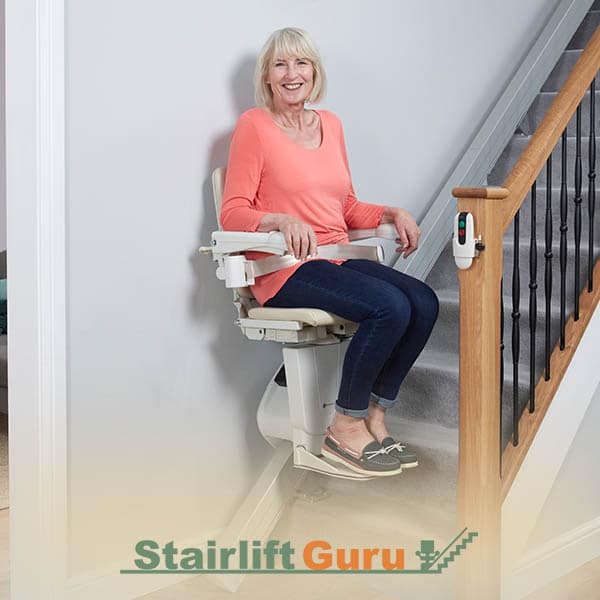
If you’re struggling with stairs at home, you may be choosing between a stairlift and a home lift. Both can improve mobility and independence but they work in very different ways and suit different needs, homes, and budgets.
This page explains the difference between a stairlift and a home lift, helping you decide which option may be right for you.
Key Takeaways
- Stairlifts and home lifts solve different mobility needs
- Stairlifts use existing stairs; home lifts move vertically
- Stairlifts are usually quicker and cheaper to install
- Home lifts offer more flexibility but cost more
- The right choice depends on mobility, space, and budget
The Short Answer: What’s the Difference?
- Stairlift: Travels along the staircase
- Home lift: Travels vertically between floors
Stairlifts adapt to your stairs; home lifts create a new route.
What Is a Stairlift?
A stairlift is:
- A chair or platform fixed to the stairs
- Moves along a rail
- Designed to carry one person up or down
Stairlifts are ideal when stairs are still accessible but difficult.
When Stairlifts Work Best
Stairlifts suit people who:
- Can sit safely
- Have limited mobility but can transfer
- Want minimal building work
- Need a quicker, lower-cost solution
What Is a Home Lift?
A home lift is:
- A small lift installed inside the home
- Moves vertically between floors
- Doesn’t rely on stairs
Home lifts can carry:
- Standing passengers
- Wheelchairs (depending on model)
When Home Lifts Work Best
Home lifts suit people who:
- Cannot use stairs at all
- Use a wheelchair
- Want step-free access between floors
- Are planning long-term adaptations
Installation Differences
stairlift installation
- Uses existing staircase
- Minimal disruption
- Usually installed in a day
Home Lift Installation
- Requires structural work
- May involve cutting floors
- Takes longer to install
Planning and permissions may be needed.
Cost Comparison
| Feature | Stairlift | Home Lift |
|---|---|---|
| Typical cost | Lower | Higher |
| Installation time | Short | Longer |
| Building work | Minimal | Significant |
| stairlift maintenance | Lower | Higher |
Costs vary by model and home.
Space & Design Considerations
- Stairlifts require sufficient stair width
- Home lifts require floor space or shaft space
Space often determines feasibility.
Mobility & Comfort
- Stairlifts require sitting (or standing models)
- Home lifts allow standing or wheelchair use
Comfort needs differ by user.
Maintenance & stairlift servicing
- Stairlifts need regular servicing
- Home lifts require professional maintenance
Maintenance costs are usually higher for home lifts.
Grants & Funding
- Stairlifts are more commonly covered by grants
- Home lifts may be partially funded in some cases
Funding depends on assessment and eligibility.
Long-Term vs Short-Term Solutions
- Stairlifts suit short-to-medium-term needs
- Home lifts suit long-term or progressive mobility issues
Future needs matter.
Which Option Is Right for You?
Choose a stairlift if:
✔ You want a quicker solution
✔ Your budget is limited
✔ You can sit safely
Choose a home lift if:
✔ You need wheelchair access
✔ You want step-free movement
✔ You’re planning long-term living adaptations
Get Clear Guidance from Stairlift Guru
At Stairlift Guru, we explain mobility options clearly so you can understand the difference between stairlifts and home lifts without pressure or confusion.
Still Unsure Which Is Best?
If you’re deciding between a stairlift and a home lift, understanding your current and future needs is key.
We’re here to help with no pressure and no obligation.
If you’re comparing stairlifts with other mobility solutions, our complete stairlift advice hub offers broad guidance across a wide range of topics to help you make the right choice — stairlift advice guide.
For insight into practical costs and long-term ownership, check out how much it costs to run a stairlift.
You might also find our stairlift vs moving house article helpful if you’re weighing staying put with accessibility solutions versus relocating your home.