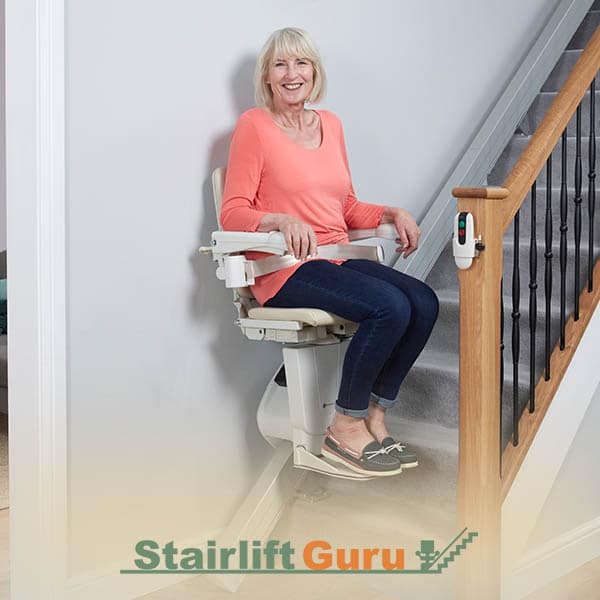
A stairlift uses far less electricity than most people expect. In real terms, many modern models use around 0.024 kWh per journey (about 24 Wh) — which is why the monthly cost is often close to £1–£5, depending on how often it’s used and your electricity unit rate.
In this guide, we’ll break down typical stairlift energy use, show you how to estimate your monthly running cost, and compare it with everyday appliances so you can see the difference clearly.
Key Takeaways
- Stairlifts are very energy-efficient and typically use around 0.024 kWh per journey.
- A stairlift’s electricity use is usually much lower than appliances like washing machines.
- Most stairlifts run on rechargeable batteries that top up while parked on the charging points.
- Your exact cost depends on usage, staircase length, and your electricity unit rate.
Quick Answer: Will a Stairlift Increase My Electricity Bill Much?
For most households, not really.
Even daily use tends to add a small amount to the bill because the stairlift is battery-powered and only draws a little electricity to recharge. Many suppliers and UK stairlift resources estimate running costs at around £1 per month for some models, with typical use still staying low.
How to Calculate Your Stairlift Running Cost
You can estimate the cost in under a minute.
Step 1: Estimate monthly energy use
A common real-world range is 2–6 kWh per month depending on usage patterns and model (heavy use will be higher).
Step 2: Multiply by your unit rate
Monthly cost = kWh per month × your electricity unit rate
Example (simple illustration):
- 4 kWh per month × £0.30 per kWh = £1.20 per month
(Use your own unit rate from your bill for accuracy.)
Why Some “Watts Per Hour” Numbers Confuse People
You’ll often see terms like “watts per hour” used loosely online. The clearer way to think about it is:
- Watts (W) = power at a moment in time
- kWh = what you’re billed for (energy used over time)
For stairlifts, a useful real-world reference point is energy per journey, commonly around 0.024 kWh for some models.
Stairlift Electricity Use vs Other Household Appliances
Stairlifts generally use much less electricity than common appliances.
For example, Stannah Stairlifts compares stairlift consumption to a washing machine, noting the stairlift is far lower (their resource cites 24W per journey vs a washing machine around 793W per hour).
That difference is why most people barely notice stairlift use on their bill.
What Affects Stairlift Energy Use?
Even though stairlifts are efficient, a few factors can push usage up or down:
- Number of trips per day (most important)
- Staircase length (longer rail = longer travel time)
- User weight (more load = more work for the motor)
- Curved vs straight (curved models can use slightly more due to rail length and complexity)
- Battery condition (older batteries can be less efficient)
How Stairlift Batteries Affect Electricity Use
Most stairlifts are powered by two 12-volt batteries that charge from a standard wall socket when the stairlift is parked on the charging points.
So the mains electricity isn’t “powering the ride” directly — it’s mostly topping up the batteries.
Typical battery lifespan
Battery lifespan varies, but a common range is around 2–5 years, depending on use and care.
What Happens in a Power Cut?
Because stairlifts run on batteries, most will still work during a power cut for a limited number of trips, which is one reason they’re considered practical for everyday use.
How to Keep Running Costs Low
These simple habits help keep electricity use (and battery wear) down:
- Always park the stairlift on the charging point
- Don’t switch it off at the wall unless instructed by your engineer
- Keep the rail and charging contacts clean (light dust can interfere with charging)
- Book regular stairlift servicing so the lift runs smoothly and efficiently
Is a Stairlift Expensive to Run Compared to Buying One?
Running costs are usually tiny compared to purchase costs — and that’s why people often focus on:
- Upfront cost (new vs reconditioned stairlifts)
- stairlift warranty and servicing plans
- Battery replacement costs over time
If you’re comparing overall affordability, it’s best to look at total cost of ownership, not just electricity.
Frequently Asked Questions
Do stairlifts use a lot of electricity?
No — stairlifts are generally considered low energy users, with some sources quoting around 0.024 kWh per journey.
How much does it cost per month to run a stairlift in the UK?
Many UK-focused sources estimate around £2–£5 per month in typical cases, depending on use and unit rates (some models may be closer to ~£1/month).
Are curved stairlifts more expensive to run than straight stairlifts?
Usually slightly, mainly because the rail is longer and the run may take more time — but it’s still generally low overall.
Do stairlifts need to stay plugged in?
Most should remain powered so the batteries can stay topped up on the charging points.
Summary
Stairlifts are one of the most energy-efficient mobility aids you can install at home. With energy use commonly discussed in terms of per-journey consumption (around 0.024 kWh for some models), the monthly running cost is usually small, especially compared to everyday appliances.
If you’re considering the ongoing expenses of ownership, our complete stairlift advice hub offers guidance on all aspects of choosing and maintaining a stairlift — stairlift advice guide.
For insight into the lifespan and replacement costs of key components, check out stairlift battery lifespan and replacement.
You might also find our seasonal stairlift maintenance for stair lifts article helpful if you’re planning for long-term care and efficiency.