Outdoor stairlifts are usually not suitable for full-time wheelchair users, but they can work in specific situations.
Traditional outdoor stairlifts are designed for people who can transfer from a wheelchair onto a seat, rather than remain in the wheelchair while travelling.
However, there are alternative outdoor access solutions that may be better suited depending on mobility level and space.
Key Takeaways
- Standard outdoor stairlifts require transferring from a wheelchair
- They suit ambulatory wheelchair users with some mobility
- Wheelchair platform lifts are a better option for non-ambulatory users
- Space, safety, and independence determine suitability
- A professional assessment is essential
How Do Outdoor Stairlifts Work?
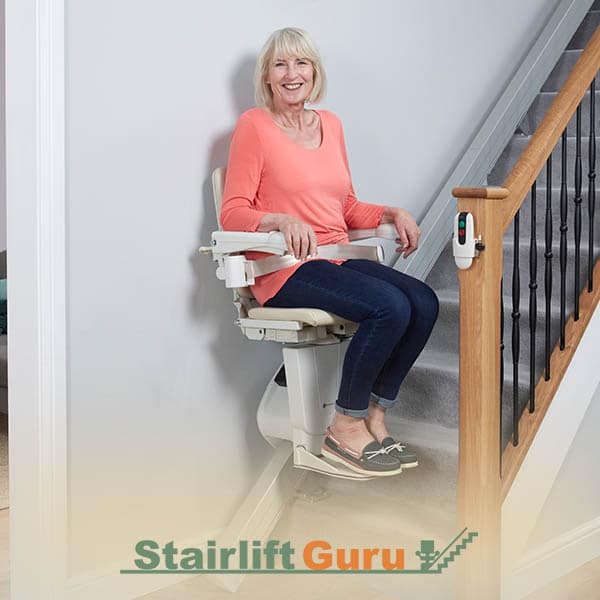
Outdoor stairlifts consist of:
- A powered seat
- A rail fixed to the steps
- Safety features such as seat belts and sensors
To use one, the person must:
- Transfer from the wheelchair onto the stairlift seat
- Ride up or down the stairs
- Transfer back into the wheelchair at the other end
Because of this, they are not designed for use while seated in a wheelchair.
When Can a Wheelchair User Use an Outdoor Stairlift?
Outdoor stairlifts can be suitable if the user:
- Has enough strength and balance to transfer safely
- Uses a wheelchair for longer distances rather than full-time
- Can stand briefly with support
In these cases, a stairlift can provide safe, independent access where ramps are impractical.
When Are Outdoor Stairlifts Not Suitable?
Outdoor stairlifts are not suitable if the user:
- Cannot transfer independently or safely
- Needs to remain in their wheelchair at all times
- Requires carer support for transfers
For these users, other mobility solutions are safer and more practical.
Better Alternatives for Full-Time Wheelchair Users
Wheelchair Platform Lifts
These lifts allow the user to remain in their wheelchair while travelling vertically or on an incline.
They:
- Support full wheelchair use
- Are designed for outdoor environments
- Require more space than stairlifts
Ramps
Ramps may work for short rises if there is enough space and a safe gradient can be achieved.
Space and Safety Considerations
Outdoor stairlifts:
- Take up minimal space
- Work on narrow or steep staircases
- Are not designed to carry wheelchairs
Platform lifts and ramps require:
- Larger installation areas
- Additional safety clearances
- Planning for weather exposure
Choosing the wrong solution can compromise safety.
Can Outdoor Stairlifts Be Adapted for Wheelchairs?
No. Standard outdoor stairlifts cannot be converted into wheelchair lifts.
The rail, seat, and motor are designed for seated passengers only. Attempting to adapt a stairlift for wheelchair use is unsafe and not recommended.
How Is the Right Option Chosen?
A professional mobility assessment considers:
- Ability to transfer
- Level of independence
- Staircase length and width
- Outdoor exposure and weather
- Future mobility changes
This ensures the solution remains safe and suitable long-term.
Final Verdict: Are Outdoor Stairlifts Suitable for Wheelchair Users?
Outdoor stairlifts are suitable only for wheelchair users who can safely transfer onto a seat.
For full-time wheelchair users who cannot transfer, a wheelchair platform lift or ramp is usually the better and safer option.
Choosing the right access solution depends on mobility level, space, and future needs and professional advice is essential.
If you’re exploring accessibility options, our full outdoor stairlifts guide walks through what to consider before choosing the right solution — outdoor stairlifts guide.
For a comparison of outdoor stairlifts versus other access solutions, check out outdoor stairlift vs ramp — it’s useful if you’re deciding what works best for wheelchair access.
You might also find what happens to an outdoor stairlift in a power cut helpful for understanding reliability in different conditions.