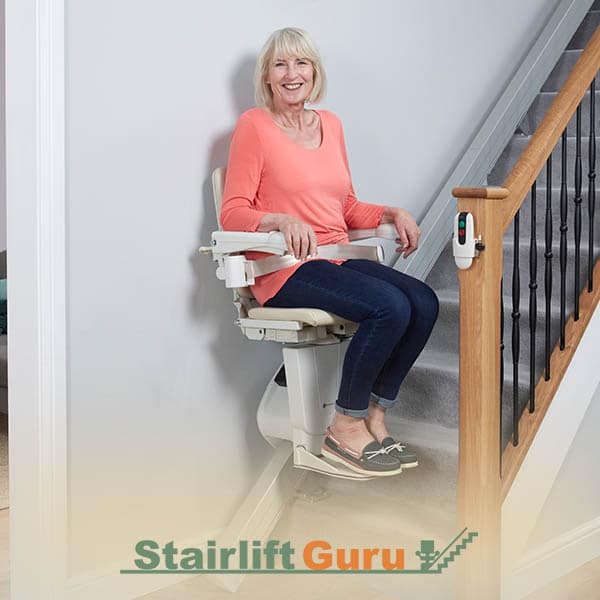
A heavy duty stairlifts stairlift is designed for people who need a higher weight capacity, more space, or extra stability than a standard stairlift can provide.
While standard stairlifts suit most users, heavy-duty models are a better option in specific situations where comfort and safety could otherwise be compromised.
This guide explains who should consider a heavy-duty stairlift and when it makes sense to choose one.
TL;DR:
A heavy-duty stairlift is best for users who exceed standard weight limits, require a wider, more supportive seat, or need extra stability for frequent or long-term use. They require wider staircases and more space than standard models, so a professional survey is essential to confirm safety and suitability.
1. Users Who Exceed Standard Weight Limits
Standard stairlifts typically support up to 120–140kg (19–22 stone).
You should consider a heavy-duty stairlift if:
- Your weight exceeds the rated limit of a standard model
- You are close to the upper limit and want extra safety margin
Using a stairlift beyond its rated capacity is unsafe.
2. People Who Find Standard Seats Too Narrow
Even if weight limits are not exceeded, some users find standard stairlift seats:
- Too narrow
- Uncomfortable
- Lacking in support
Heavy-duty stairlifts offer wider, deeper seats that improve comfort and confidence.
3. Users Who Need Extra Stability and Support
Heavy-duty models provide:
- Larger seating area
- Stronger frames
- Greater sense of balance
They are well suited to users who feel unstable or insecure on standard stairlifts.
4. People Using the Stairlift Frequently
If the stairlift will be used multiple times per day, a heavy-duty model may be preferable.
Why:
- Built for higher loads and repeated use
- More robust components
- Often smoother operation under load
This makes them ideal for primary household access.
5. Users Planning for Long-Term Needs
If mobility is expected to decline over time, choosing a heavy-duty stairlift early can:
- Avoid future upgrades
- Provide long-term peace of mind
- Ensure continued safety as needs change
This is particularly relevant for progressive conditions.
6. Households Where Comfort Is a Priority
Some users prioritise comfort over size or cost.
Heavy-duty stairlifts offer:
- Extra cushioning
- Better posture support
- More room to sit comfortably
For these users, the additional cost can be worthwhile.
Who Should Not Consider a Heavy-Duty Stairlift?
A heavy-duty stairlift may not be suitable if:
- The staircase is narrow
- There is limited landing space
- The user fits comfortably within standard limits
- Budget is a major constraint
In these cases, a standard or slimline stairlift may be safer and more practical.
How Is Suitability Confirmed?
A professional survey assesses:
- User weight and comfort needs
- Stair width and clearance
- Landing space
- Staircase structure
- Long-term mobility considerations
This ensures the right stairlift is chosen safely.
Final Verdict: Who Should Consider a Heavy-Duty Stairlift?
Heavy-duty stairlifts are best for users who need higher weight capacity, extra space, or increased stability.
They are ideal for larger users, daily use, or long-term mobility needs, provided the staircase can safely accommodate the larger unit.
A professional assessment is essential before choosing a heavy-duty model.
If you’re thinking about whether a heavy-duty model is right for you, our full heavy duty stairlifts guide walks through the key benefits and features — heavy duty stairlifts guide.
For comparison with standard options, check out heavy duty stairlifts vs standard stairlifts to see how specs and suitability differ.
You might also find our article on are heavy duty stairlifts more expensive useful if cost is a deciding factor for you.