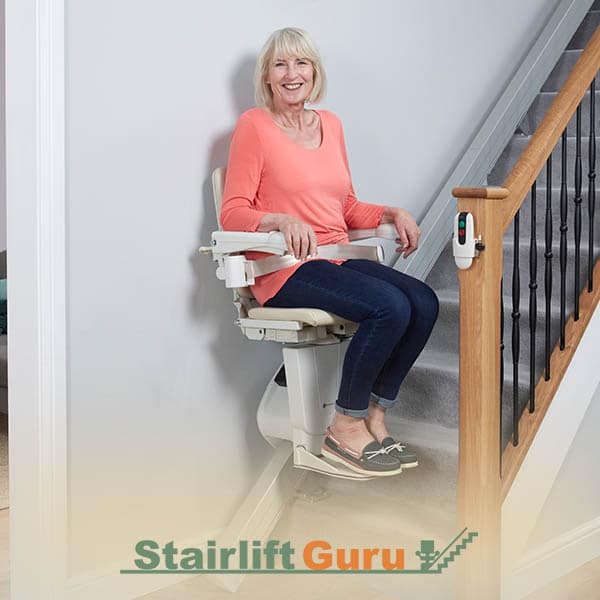
heavy duty stairlifts stairlifts prioritise comfort and space, offering wider seats and robust support for users who need extra room or strength.
Because these models are designed for larger body types and higher weight capacities, their seat size and overall comfort are often superior to those of standard stairlifts, making daily use easier and more enjoyable.
TL;DR:
Heavy-duty stairlifts offer wider, deeper, and more comfortable seats than standard models, with extra padding and stronger support. This improves stability, posture, and comfort, especially for frequent daily use. Because the larger seat affects space and fit, a professional survey is essential to ensure the staircase and seat are suitable.
How Heavy-Duty Stairlift Seats Differ
Compared to standard models, heavy-duty stairlift seats generally include:
1. Wider Seat Width
Heavy-duty seats are typically wider to accommodate larger users comfortably and safely.
This extra width reduces pressure points and increases confidence during use.
2. Deeper Seat Depth
A deeper seat allows users to sit with full thigh support rather than perched forward.
Greater seat depth distributes weight more evenly for comfort and stability.
3. Stronger Seat Structure
Reinforced frames and stronger mounting points support higher weights without flexing or strain.
Together, these features create a more comfortable, secure seating experience.
Comfort Features Common on Heavy-Duty Stairlifts
Many heavy-duty stairlifts include additional comfort and usability features, such as:
- Extra cushioning or memory-foam padding
Improves comfort, especially for longer journeys or daily use. - Contoured seats
Provide better posture and support. - Adjustable armrests
Help users find a comfortable position during travel. - Seat belts and safety harness options
Add security without sacrificing comfort. - Swivel seats
Make getting on and off easier, especially on stairlifts for narrow stairss or small landings.
These features matter most for users who will use the stairlift multiple times each day.
Why Seat Size Matters
The right seat size contributes to:
- Comfort over repeated daily use
- Better balance and posture
- Reduced strain on hips, back, and legs
- Greater confidence and peace of mind
Heavy-duty stairlifts are often purchased because standard seats feel too tight or uncomfortable, particularly for larger users.
Do Wider Seats Affect Stair Width?
Yes, but not always significantly.
- Heavy-duty stairlift seats are wider, which can impact stair clearance.
- Professional installers assess whether the extra width still allows safe passage for others.
- Slimline heavy-duty options or custom solutions may be used where stairs are tighter.
The key is balancing seat comfort with staircase usability and safety.
Adjustments and Custom Options
Many providers offer custom or adjustable seats, including:
- Removable or interchangeable cushions
- Higher backrests
- Armrest adjustments
- Seat-height options
These tweaks can tailor comfort to individual user needs.
Professional Survey and Fitting
Seat comfort is not just about measurements; it’s about fit for the person:
During a professional survey, installers will:
- Measure user dimensions (hip width, leg length)
- Check posture and transfer needs
- Recommend the right style and size of seat
- Ensure safe installation with appropriate rail spacing
This tailored approach ensures safe, comfortable long-term use.
Final Verdict: Seat Size and Comfort on Heavy-Duty Stairlifts
Heavy-duty stairlifts typically feature larger, more comfortable seating that improves support, stability, and daily usability.
Wider, deeper seats with added padding, an ergonomic design, and adjustable features make them better suited for larger users or anyone prioritising comfort, provided the staircase can safely accommodate the wider unit.
If you’re weighing comfort along with functionality, our complete heavy duty stairlifts guide breaks down what to consider before choosing a system — heavy duty stairlifts guide.
For insight into how heavy-duty models compare with other options, check out heavy duty stairlifts vs standard stairlifts — it’s great for understanding differences in design and usability.
You might also find our article on are heavy duty stairlifts safe for daily use helpful if reliability is a priority for you.