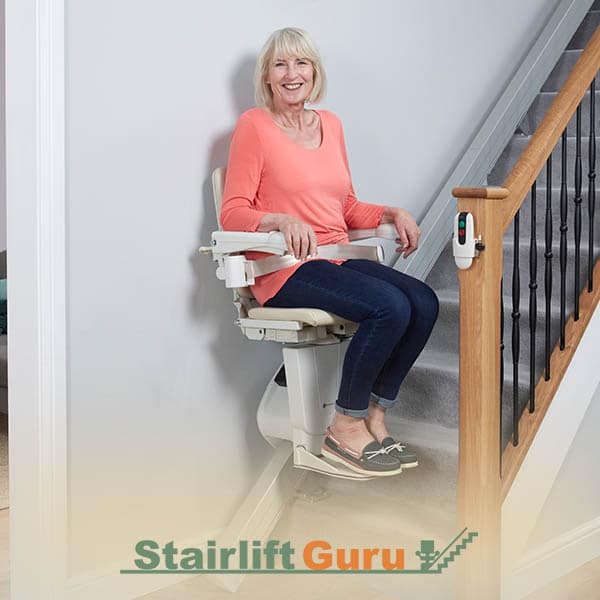
heavy duty stairlifts stairlifts are safe and reliable, but their larger size and higher weight capacity create unique installation challenges.
These challenges don’t mean installation isn’t possible; they only mean it requires more space, stronger fixings, and careful planning compared to standard stairlifts.
This guide explains the main installation challenges for heavy-duty stairlifts and how they are typically managed.
TL;DR:
Heavy-duty stairlifts are safe and reliable, but they need more space, stronger fixings, and careful planning than standard models. Staircase width, landing space, structural strength, and clearance are the main challenges. A professional survey is essential to confirm whether the installation is safe and practical or if an alternative solution is needed.
1. Staircase Width Limitations
The challenge:
Heavy-duty stairlifts have wider seats and frames, which need more usable stair width.
Why it matters:
- stairlifts for narrow stairss may not provide enough clearance
- Folding components still project further than standard models
- Other household members still need safe stair access
How it’s addressed:
- Measuring usable width at multiple points
- Assessing folded clearance
- Recommending alternative models if space is insufficient
2. Landing Space for Mounting and Dismounting
The challenge:
Safe transfers require more space with heavy-duty seating.
Why it matters:
- Larger seats need more turning and standing room
- Small landings increase fall risk
How it’s addressed:
- Swivel seats that turn away from the staircase
- Extended or offset rail ends
- Custom stopping positions
3. Structural Strength of the Stairs
The challenge:
Heavier loads place more stress on stair treads and fixings.
Why it matters:
- Older or worn stairs may flex or weaken
- Fixings must handle repeated heavy loads
How it’s addressed:
- Structural assessment of steps
- Reinforced fixings or brackets
- Minor stair repairs before installation
4. Rail and Bracket Design
The challenge:
Heavy-duty stairlifts require reinforced rails and closer-spaced brackets.
Why it matters:
- Increases overall rail footprint
- Limits flexibility on narrow or winding stairs
How it’s addressed:
- Bespoke rail design
- Precise bracket spacing
- Engineering checks during installation
5. Headroom and Body Clearance
The challenge:
Larger users and wider seats need sufficient head and shoulder clearance.
Why it matters:
- Risk of head contact on steep or tight stairs
- Reduced comfort and safety
How it’s addressed:
- Headroom measurement during survey
- Adjusted seat height or position
- Declining installation if clearance is unsafe
6. Impact on Household Access
The challenge:
Heavy-duty stairlifts take up more space when folded.
Why it matters:
- Reduced walking space
- Potential obstruction on narrow stairs
How it’s addressed:
- Assessing folded clearance
- Recommending parking positions away from walkways
- Advising on alternative access solutions if needed
7. Cost and Availability
The challenge:
Heavy-duty stairlifts are more specialised.
Why it matters:
- Higher equipment and installation costs
- Fewer models available
- Longer lead times
How it’s addressed:
- Comparing suitable models
- Exploring standard or alternative solutions if appropriate
Why a Professional Survey Is Essential
A heavy-duty stairlift survey checks:
- Usable stair width
- Landing and transfer space
- Stair structure and strength
- User size and comfort needs
- Safety and clearance throughout the run
This ensures installation is safe and practical before any commitment.
When Heavy-Duty Stairlifts May Not Be Suitable
Installation may not be recommended if:
- The staircase is too narrow
- Landing space is insufficient
- Structural reinforcement isn’t possible
- Safe clearance can’t be maintained
In these cases, alternative access solutions may be advised.
Final Verdict: Installation Challenges for Heavy-Duty Stairlifts
Heavy-duty stairlifts can be installed safely, but they present additional challenges compared to standard models.
Stair width, structural strength, and clearance are the most common hurdles, all of which must be addressed through professional assessment and planning.
A detailed survey is essential to ensure safe, long-term use.
If you’re considering the installation for a heavy-duty model, our complete heavy duty stairlifts guide walks through key factors to think about before choosing a system — heavy duty stairlifts guide.
For insight into how these models compare with standard options, check out heavy duty stairlifts vs standard stairlifts — it’s useful for understanding variation in size, power, and installation requirements.
You may also find our article on do heavy duty stairlifts fit on narrow stairs helpful if your staircase has tighter dimensions.