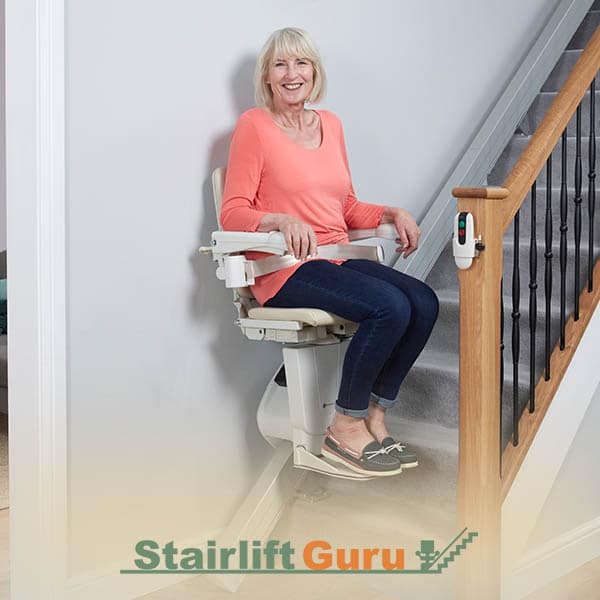
The main difference between heavy duty stairlifts and standard stairlifts is weight capacity, seat size, and structural strength.
Both types are safe and reliable, but they are designed for different users and staircases. Choosing the right one depends on body size, comfort needs, staircase width, and how often the stairlift will be used.
This guide compares heavy-duty stairlifts vs standard stairlifts to help you decide which offers the best fit and value.
TL;DR:
Standard stairlifts suit most users and fit narrower staircases, while heavy-duty stairlifts are designed for higher weight limits, wider seats, and extra stability. Heavy-duty models require more space and typically cost more but offer greater comfort for larger users or those who use them frequently. The right choice depends on user size, staircase width, and long-term needs, and should always be confirmed with a professional survey.
What Is a Standard Stairlift?
A standard stairlift is designed for average-sized users and typical residential staircases.
Standard stairlifts usually offer:
- Weight limits of around 120–140kg (19–22 stone)
- Compact seats and footrests
- Slim rails suitable for narrow or standard stairs
- Lower overall cost
They are the most common type installed in UK homes.
What Is a Heavy-Duty Stairlift?
A heavy-duty stairlift is designed for users who need higher weight capacity and more space.
Heavy-duty stairlifts typically feature:
- Weight limits of 160–200kg (25–31 stone)
- Wider, reinforced seats
- Stronger frames and rails
- More powerful motors
They prioritise strength, stability, and comfort for larger users.
Weight Capacity Comparison
| Feature | Standard Stairlift | Heavy-Duty Stairlift |
|---|---|---|
| Typical Weight Limit | 120–140kg | 160–200kg |
| Seat Width | Standard | Wider |
| Frame Strength | Standard duty | Reinforced |
| Motor Power | Standard | Higher torque |
Weight capacity is one of the most important deciding factors.
Staircase Space Requirements
Standard Stairlifts
- Suitable for narrow and average stairs
- Better for terraced houses and tight staircases
- Fold away compactly
Heavy-Duty Stairlifts
- Require more clearance
- Need wider staircases
- Not suitable for very stairlifts for narrow stairss
A staircase that fits a standard stairlift may not be suitable for a heavy-duty model.
Comfort and Stability
Heavy-duty stairlifts offer:
- Larger seating area
- Greater sense of stability
- More space for comfort
Standard stairlifts are still comfortable for most users, but may feel restrictive for larger individuals.
Daily Use and Durability
Both types are designed for regular use, but:
- Heavy-duty stairlifts are built for higher loads and frequent use
- Standard stairlifts handle daily use well within their limits
For users near the upper weight limit of a standard stairlift, a heavy-duty model may be safer in the long term.
Cost Differences
Heavy-duty stairlifts generally cost more because of:
- Reinforced materials
- Larger components
- More powerful motors
- Limited model availability
Standard stairlifts are usually the most cost-effective option for eligible users.
Which Is Safer?
Both are equally safe when used within their designed limits.
Safety depends on:
- Correct weight rating
- Professional installation
- Regular stairlift servicing
Using a stairlift above its rated capacity, whether standard or heavy-duty, is unsafe.
How Do You Choose the Right One?
A professional stairlift survey considers:
- User weight and comfort needs
- Stair width and clearance
- Stair shape (straight or curved)
- Frequency of use
- Future mobility needs
This ensures the stairlift chosen is safe, comfortable, and practical.
Final Verdict: Heavy-Duty Stairlifts vs Standard Stairlifts
Standard stairlifts are suitable for most users and staircases, while heavy-duty stairlifts are best for larger users who need extra strength and space.
The right choice depends on user size, staircase width, and long-term needs, not just price.
A professional survey is essential to determine which option is safest and most appropriate.
If you’re comparing options, our complete heavy duty stairlifts guide is a great place to start for understanding what sets these systems apart — heavy duty stairlifts guide.
For insights into the practical side of ownership, check out installation challenges for heavy duty stairlifts to see what to expect during setup.
You might also find our article on seat size and comfort on heavy duty stairlifts helpful if comfort and usability are top priorities.