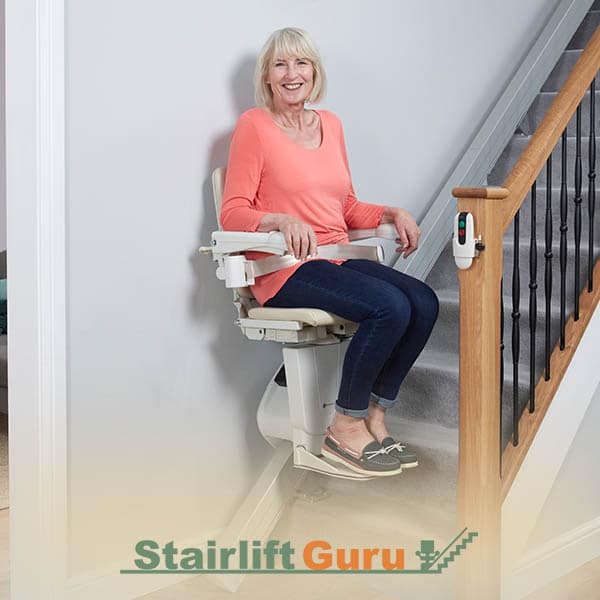
heavy duty stairlifts stairlifts are ideal for users with higher weight requirements or who need extra space, but they’re not the only option.
If a heavy-duty stairlift isn’t suitable due to staircase width, budget, or other factors, several alternative solutions can provide safe, accessible mobility between floors.
This guide explains the main alternatives to heavy-duty stairlifts and when each might be appropriate.
TL;DR:
Heavy-duty stairlifts aren’t always necessary or practical. Depending on weight, mobility, staircase width, and budget, alternatives like standard or slimline stairlifts, platform lifts, step lifts, vertical through-floor lifts, or home modifications may be safer and more suitable. A professional assessment is key to choosing the right solution.
1. Standard Stairlifts
What they are:
Traditional stairlifts designed for most users with standard weight limits (usually around 120–140kg / 19–22 stone).
Why they’re an alternative:
- Often fit narrow and average staircases
- Lower cost than heavy-duty models
- Plenty of slimline and compact options
Best for:
- Users within standard weight ranges
- stairlifts for narrow stairscases
- Budget-sensitive installations
2. Slimline Stairlifts
What they are:
Stairlifts with narrower seats and compact footprints, specifically designed for tight staircases.
Why they’re an alternative:
- Take up less space
- Fold away neatly
- Ideal for narrow terraced stairs
Best for:
- Users who do not exceed standard weight limits
- Very narrow staircases
- Situations where space is the main constraint
3. Wheelchair Platform Lifts
What they are:
Vertical or inclined platform lifts that allow wheelchair users to remain in their chairs while moving between levels.
Why they’re an alternative:
- No need to transfer from a wheelchair
- Can be more accessible for full-time wheelchair users
- Often work where stairlifts can’t be used due to width constraints
Best for:
- Full-time wheelchair users
- Homes with space for vertical or angled lifts
- Users are unable to transfer to a seat
4. Step Lifts
What they are:
Small platform lifts that raise users up one or a few steps rather than travelling the full staircase.
Why they’re an alternative:
- Compact and cost-effective
- Suitable for small rises at entrances or internal steps
Best for:
- Short stair runs
- Situations where a full stairlift isn’t necessary
5. Inclined Platform Lifts
What they are:
Platform lifts that travel up the stairs on a rail similar to a stairlift but carry a wheelchair or larger seat.
Why they’re an alternative:
- Allow wheelchair access without transferring
- Work on some staircases too narrow for stairlifts
Best for:
- Users needing wheelchair access
- Staircases with enough width to accommodate an incline platform
6. Home Modifications
What they are:
Structural changes to the home such as:
- Widening stairways
- Reconfiguring landings
- Adding handrails or modifying steps
Why they’re an alternative:
- Create space for accessibility solutions
- Improve safety for all household members
Best for:
- Long-term accessibility planning
- High-traffic stair use
- Homes with structural flexibility
7. Vertical Through-Floor Lifts
What they are:
Compact lifts that travel vertically between levels without using stairs.
Why they’re an alternative:
- Require minimal horizontal space
- Provide step-free access between floors
- Can be fitted in closets or small rooms
Best for:
- Homes with limited stair space
- Full wheelchair access needs
8. Portable Ramps & Modular Ramps
What they are:
Ramp systems that bridge small level changes without mechanical lifts.
Why they’re an alternative:
- No installation needed
- Budget-friendly
- Useful for small rises or threshold step changes
Best for:
- Minimal vertical change
- Temporary or low-usage scenarios
Choosing the Right Alternative
When deciding between alternatives, consider:
Mobility Needs
- Do you need wheelchair travel or just a seat lift?
- Can the user transfer safely?
Space Constraints
- How narrow is the staircase?
- Is there room for a platform or vertical lift?
Budget Considerations
- Stairlifts (standard or slim) are often more affordable than vertical lifts
- Home modifications may cost more up front
Frequency of Use
- Daily heavy use may favour robust solutions
- Occasional use might suit simpler alternatives
A professional mobility assessment helps match the best solution to your situation.
Final Verdict: Alternatives to Heavy-Duty Stairlifts
Heavy-duty stairlifts are not the only option, and sometimes not the best one.
Standard stairlifts, slimline models, platform lifts, step lifts, and home modifications can all provide safe, accessible solutions when heavy-duty units are impractical. The right choice depends on user needs, staircase layout, and long-term mobility goals.
If you’re exploring options aside from heavy-duty models, our complete heavy duty stairlifts guide walks through what makes these systems different and worth considering for your home.
For comparisons between different stairlift types, check out heavy duty stairlifts vs standard stairlifts — it’s useful for seeing how each option meets varied needs.
You might also find our article on who should consider a heavy duty stairlift helpful when thinking about whether this solution fits your situation.