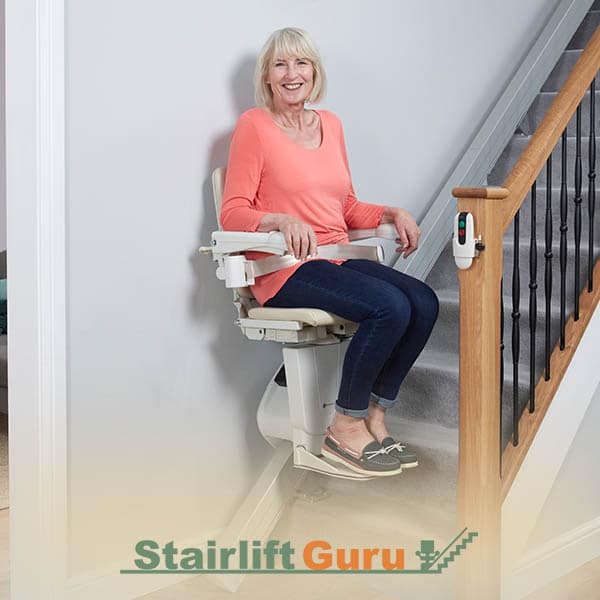
When adapting your home for mobility and accessibility, two common options for moving between floors are curved stairlifts and home lifts (also known as residential lifts). Each has unique benefits, costs, and practical considerations.
This page explains the differences between curved stairlifts and home lifts so you can decide which solution is right for your lifestyle and home.
Key Takeaways
- Curved stairlifts follow the shape of your existing staircase
- Home lifts provide a vertical, platform-based solution
- Stairlifts are usually more affordable and quicker to install
- Home lifts offer step-free access for all users
- Space, budget, and mobility needs help determine the best choice
The Short Answer: Which Is Better?
There’s no one-size-fits-all answer. A curved stairlift is often best when you need assistive access on a staircase with turns or landings. A home lift is usually better if you want full, step-free movement between floors without using the stairs at all.
Your personal needs, home layout, and budget will guide the right solution.
What Is a Curved Stairlift?
A curved stairlift is a rail-mounted seat that travels along your staircase, following its exact shape including bends and landings. It’s used while seated and is designed to help people who can step on/off a stairlift but struggle with stairs.
Good for:
- Homes with existing staircases
- People who can safely transfer in and out of a seat
- Those looking for a relatively quick, cost-effective option
What Is a Home Lift?
A home lift (also called a residential lift or platform lift) is a small elevator installed inside the home. It typically moves vertically between two or more floors and can carry people standing, seated, or in a wheelchair.
Good for:
- Full step-free access
- Wheelchair users
- Long-term accessibility needs
Curved Stairlift vs Home Lift: Side-by-Side
| Feature | Curved Stairlift | Home Lift |
|---|---|---|
| Staircase support | Yes even with bends/landings | Not needed |
| Step-free access | No still uses stairs | Yes complete vertical travel |
| Installation time | Weeks (custom rail) | Weeks to months (structural prep) |
| Cost | Lower overall cost | Higher overall cost |
| Space required | Fits staircase | Needs shaft or space for lift |
| Ideal for wheelchair users | Limited (transfer required) | Excellent (no transfer) |
| Resale / removal | Easier to remove | More permanent |
| Aesthetic impact | Mounted to stairs | May require structural changes |
Cost Comparison
Curved stairlifts are generally more affordable than home lifts. This is because:
- Rails are custom-made, but installation is less invasive
- No structural changes or lift shaft are needed
Home lifts usually cost more because:
- Structural or shaft preparation is often required
- Permits and safety features add expense
However, long-term accessibility needs may make a home lift a better value for some families.
Accessibility & Daily Use
Curved Stairlift
- Best for people who can transfer to a seat
- Riders must sit and operate controls
- Excellent for seated mobility up stairs
Home Lift
- Best for wheelchair users or those who struggle with transfers
- Provides true step-free access
- Can carry wheelchairs, walkers, and other equipment
Space & Structural Considerations
- Curved stairlifts attach to existing stairs and don’t require major home changes.
- Home lifts may require:
- Structural reinforcement
- A vertical shaft or open floor space
- Permits or building approval in some regions
A professional assessment helps clarify what’s feasible in your home.
Safety & Comfort
Both solutions are designed with safety in mind, but they differ in experience:
Curved Stairlifts
- Smooth travel around bends
- Seatbelts and sensors
- Easier to install and maintain
Home Lifts
- True vertical movement
- Door interlocks and multiple safety systems
- Ideal for long-term, all-access mobility
Which Is Right for You?
Consider a curved stairlift if:
- Your home has a complex staircase
- You want a seated option that’s safer than climbing stairs
- You’re looking for lower cost and quicker installation
Consider a home lift if:
- You need full step-free access
- A wheelchair is used regularly
- You want a long-term solution without transferring seats
Get Expert Guidance
At Stairlift Guru, we explain your options clearly and help you think through:
- Safety needs
- Daily use
- Space and budget realities
There’s no one-size-fits-all just the right solution for you.
Explore Your Accessibility Options
If you’re deciding between a curved stairlift and a home lift, getting expert advice is the best first step.
We’re here to help with no obligation.
If you’re weighing up mobility solutions, our full curved stairlifts guide explains what to consider before choosing the right option for your home.
To compare different stairlift designs more directly, check out curved vs straight stairlifts — it’s useful for seeing how each type fits varying layouts.
You may also find our new vs reconditioned curved stairlifts article helpful when thinking about cost and product condition.