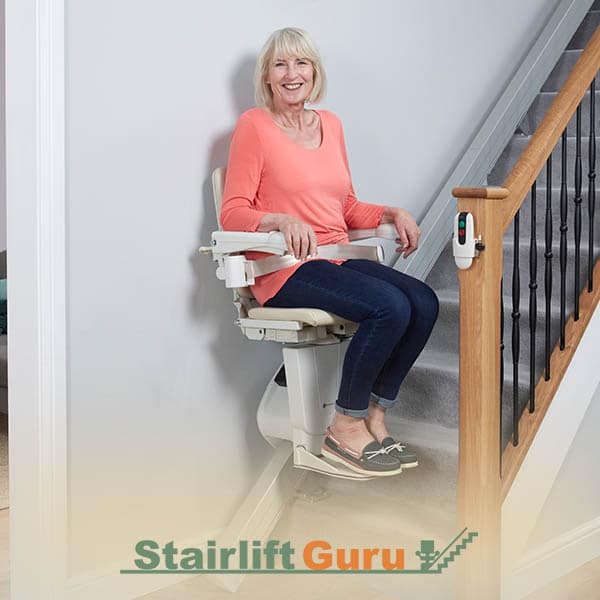
Today’s stairlifts are improving rapidly due to:
- An ageing global population
- Increased demand for ageing-in-place solutions
- Advances in smart home technology
- Greater focus on dignity, independence, and energy efficiency
Modern stairlifts already look very different from early models, and future designs are expected to move even further away from the “clinical” look of the past.
Smart Technology and the Next Generation of Stairlifts
One of the biggest shifts in stairlift development is the integration of smart technology.
Future stairlifts may include:
- Voice control for hands-free operation
- Wireless connectivity for monitoring and diagnostics
- Smart home integration, allowing stairlifts to work alongside lighting, alarms, or security systems
- User authentication, such as PIN codes or identification systems, to prevent unauthorised use
These features aim to improve safety while giving users greater control and confidence.
Improved Power and Energy Efficiency
Power systems are also evolving.
Many modern stairlifts already use rechargeable batteries, but future models are expected to:
- Use lithium-ion batteries for longer life and faster charging
- Consume less electricity overall
- Rely on sustainable materials and manufacturing processes
This makes stairlifts more reliable during power cuts and more environmentally responsible.
Greater Accessibility for Wheelchair Users
Traditional stairlifts require users to transfer from a wheelchair to a seat, which can limit independence.
Future designs may explore:
- Platform-style stairlifts that allow users to remain in their wheelchair
- Hybrid designs that sit between stairlifts and home lifts
- More compact solutions suitable for standard UK homes
These changes could significantly expand who stairlifts are suitable for.
Currently, stairlifts are designed for one user at a time. While this suits most households, future designs may:
- Better support shared use in family homes
- Offer adjustable settings for different users
- Include improved safety features for carers or helpers
The focus is likely to remain on safety first, with flexibility added where appropriate.
Design, Comfort, and Dignity
Future stairlifts are expected to place even greater emphasis on:
- Sleeker, more discreet designs
- Better ergonomics and comfort
- Custom finishes that blend into modern homes
Rather than standing out, stairlifts are increasingly designed to fit in.
What the Future of Stairlifts Looks Like
While no one can predict every innovation, the direction is clear.
The future of stairlifts is likely to include:
- Smarter controls and interfaces
- Greater accessibility for more users
- Improved energy efficiency
- Enhanced safety and security
- Better integration with modern homes
All with the same core goal: helping people live independently and safely at home for longer.
Summary: The Future of Stairlifts
Stairlifts have been supporting mobility for over a century, but the next generation will be more intelligent, efficient, and inclusive than ever before. As technology advances and demand grows, stairlifts will continue to evolve, improving the quality of life while preserving dignity and independence.
If you’re considering a stairlift today, it’s reassuring to know that modern models already benefit from many of these advancements, and future upgrades will only improve them.